
BLUF:
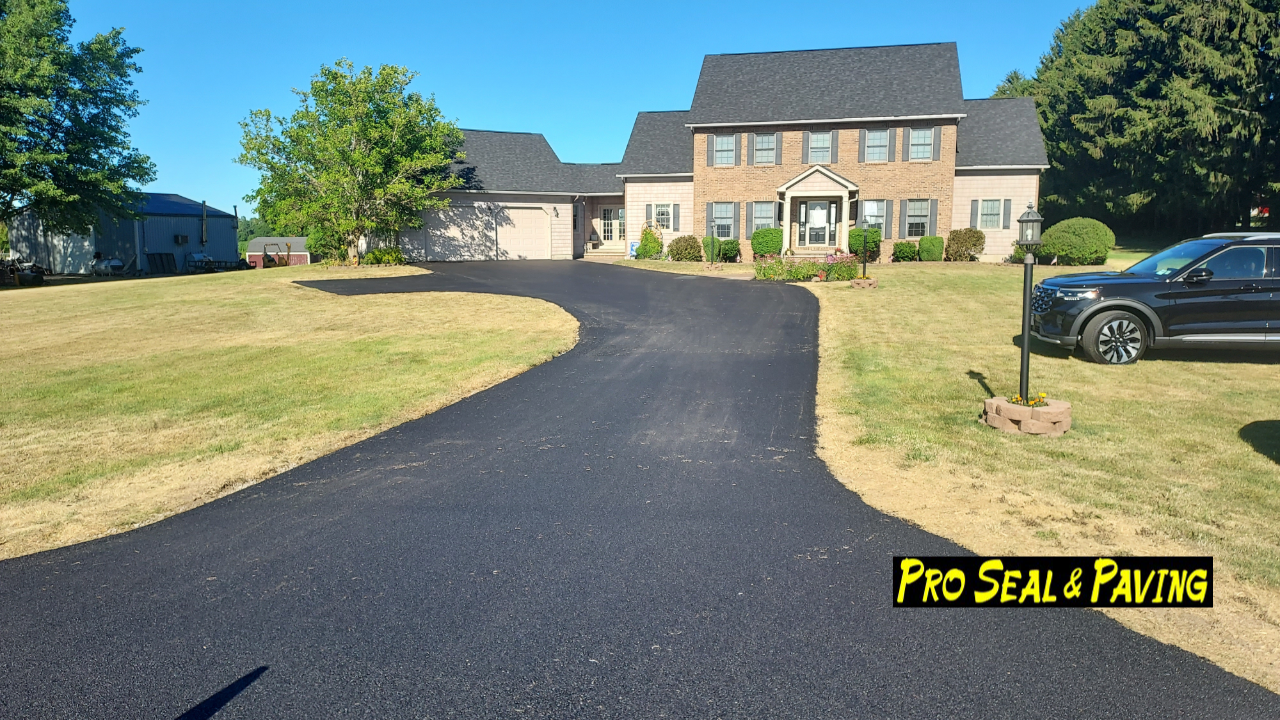
For homeowners in Genesee County whether in Batavia, Le Roy, Oakfield, Byron, or Alexander, a long-lasting, functional residential driveway starts with proper design, quality materials, and precise installation. Addressing drainage, freeze-thaw exposure, soil conditions, and regular maintenance ensures your asphalt driveway withstands Western New York’s climate and delivers durable performance year after year. Proper planning and professional paving radically improves curb appeal, protects your investment, and prevents costly repairs down the road.
Table of Contents
Introduction
I’m Joshua Piscitelli, owner of Pro Seal & Paving, and I’ve helped homeowners throughout Genesee County, NY, from Batavia to Le Roy, Oakfield, Byron, and Alexander plan, install, and maintain residential driveways that stand up to our unique weather and soil conditions. A driveway isn’t just pavement. It’s an investment in safety, curb appeal, and your home’s value.
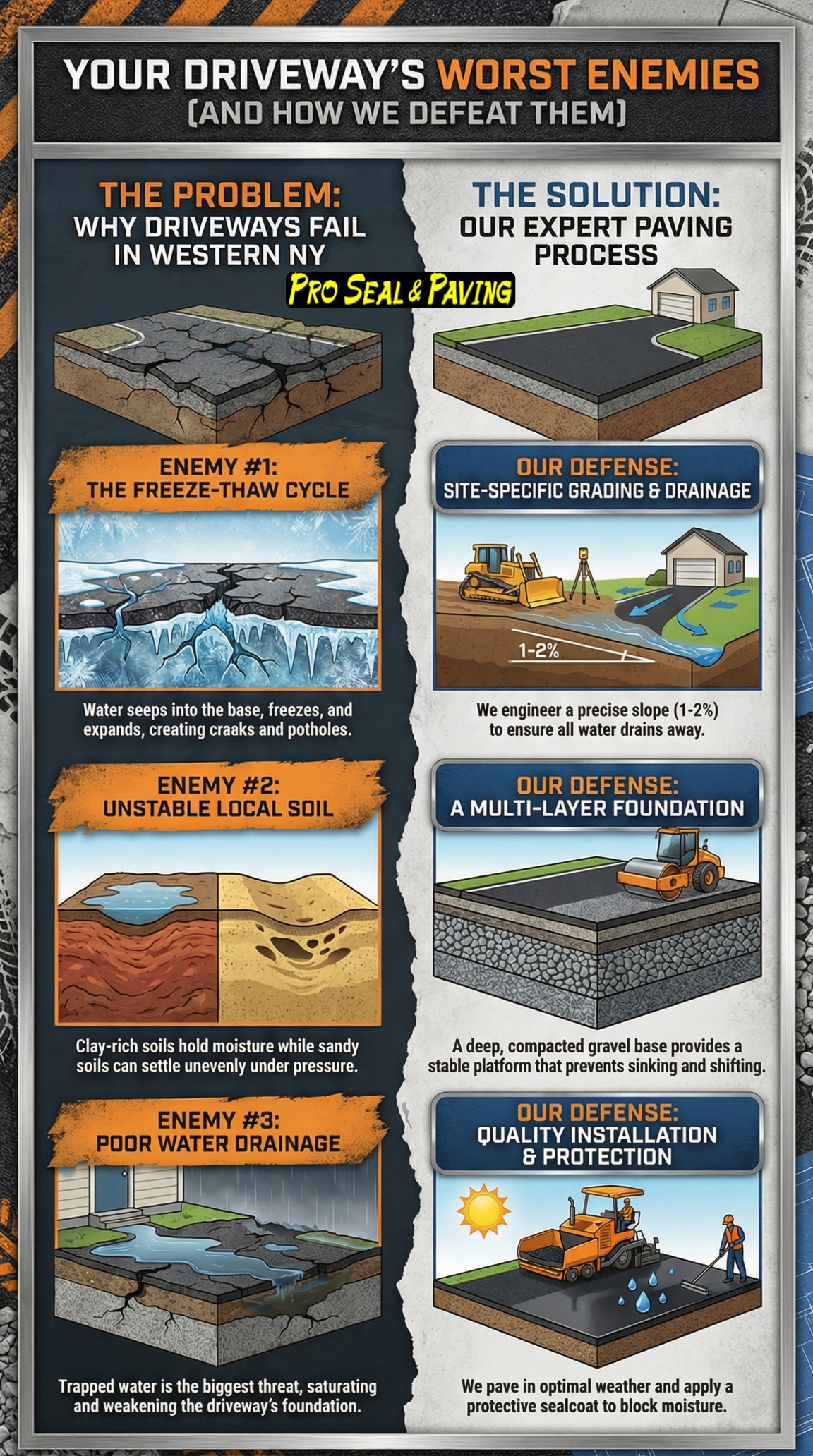
Here in Western New York, we see a full range of weather, heavy snow, frequent freeze-thaw cycles, and seasonal rain, all of which put stress on asphalt surfaces. Combine that with variable soil types across Genesee County, and you can see why many driveways fail prematurely when not correctly designed and installed.
This post will walk you through the things I’ve learned about successful driveway paving from my years in the field.
Chapter 1: Understanding Genesee County Weather and Soil
When planning a residential driveway in **Genesee County, NY, including Batavia, Le Roy, Oakfield, Byron, and Alexander, understanding local weather patterns and soil conditions is critical to building pavement that lasts. The region’s climate and soil behavior significantly influence how asphalt performs over time.
Western New York Climate and Freeze-Thaw Cycles
Genesee County exists in a climate zone characterized by cold winters, frequent freeze-thaw cycles, and variable spring/summer moisture levels. Temperatures regularly fluctuate around the freezing point here, causing water that has penetrated the surface or base layer of your driveway to freeze and expand, then thaw and contract repeatedly. This process, called frost heaving, pushes upward on soil and pavement, creating cracks, undermining support, and eventually leading to surface failures like cracking and potholes.
Driveway surfaces in your Batavia or Le Roy neighborhood will therefore experience seasonal stress that can lead to long-term deterioration unless properly managed through design and material choices. Engineers use frost depth and seasonal length data to guide pavement design because the depth and duration of frost directly influence how deeply water penetrates and how pavement responds.
Soils in Genesee County: Variability and Impact
Underneath the pavement, soil is not uniform across Genesee County. According to detailed soil surveys, common soil types include silt loams (like Aurora and Newstead), silty clay loams (such as Lakemont and Hilton), and sandy loams (such as Lamson). These soils differ in drainage properties, compaction behavior, and frost susceptibility.
- Silt- and clay-rich soils hold moisture longer than sandy soils, increasing the risk of frost heaving, soft subgrade conditions during thaws, and drainage challenges under and around driveway surfaces.
- Sandy loams and gravelly components, on the other hand, drain more freely but may require additional compaction support because they can shift or settle under load if not adequately prepared.
This variation means that the exact soil on your property, whether in Oakfield near lowland agricultural fields or on higher ground around Byron, directly affects how we design the base and grading for your driveway. Optimizing soil and subgrade conditions before paving helps minimize future cracking and settlement.
Moisture and Erosion Considerations
Water management is one of the most critical aspects of driveway durability here. In Genesee County, seasonal precipitation patterns, including rain, snow, and thaw runoff, require driveways to shed water efficiently. Standing water beneath or alongside a driveway accelerates deterioration because saturated soil loses strength, especially in spring when ice begins to melt. This is compounded by heavier storms or prolonged moisture events, which are increasingly observed across New York State.
A poorly-draining driveway base under a long drive in Byron or Alexander will trap moisture beneath the pavement surface. Over multiple seasons of freezing and thawing, this moisture causes structural weakness and premature failure if not addressed with proper grading and drainage systems during installation.
What This Means for Your Driveway
Overall, Genesee County’s weather and soils demand personalized driveway preparation rather than a “one size fits all” approach. The freeze-thaw dynamics, combined with soil types that may hold moisture near the surface, mean that drainage design, base preparation, and grading are essential to creating a stable, long-lasting driveway foundation. These site-specific considerations help driveways withstand seasonal stress, promote proper runoff, and significantly reduce long-term repair costs.
Chapter 2: Planning Your Driveway Project
Planning is the most important step in a successful residential driveway project, especially here in Genesee County, where weather, soil, and municipal requirements all influence how your driveway will perform over the years and decades.
Before any asphalt goes down, I take time to walk the property with homeowners in Batavia, Le Roy, Oakfield, Byron, or Alexander to evaluate the site. That initial visit isn’t just a courtesy it’s where we determine everything from driveway layout and width to grading, drainage needs, and local compliance.
Driveway Layout and Expected Use
The design of your driveway affects longevity and usability. A driveway that is too narrow or poorly aligned with your garage or yard can create problems with traffic flows, turning radius, and snow removal. During planning, I consider:
- Width requirements ensure sufficient space for cars, trucks, or even RVs without encroaching on landscaping.
- Angle of entry and exit, especially if you sit near a public roadway or curve, where sight distance matters.
- Slope and elevation changes long driveways in Byron or Alexander with elevation shifts need tailored grading to prevent erosion at low points and reduce the risk of water pooling.
This approach helps prevent future issues with water accumulation, surface damage, or inconvenient access.
Grading and Drainage Design
Proper grading and drainage are the foundation of driveway durability. Water sitting on or under your driveway is its biggest enemy and if moisture infiltrates beneath the asphalt and freezes during winter, it can lead to cracking, heaving, and costly repairs. According to professional grading practices, driveways should be sloped just enough to move water away from structures. Often, a slight pitch of 1 to 2% away from the home toward the street or drainage swale ensures adequate runoff.
Once a slope is determined, the surface is excavated and the subgrade compacted. This process removes unstable soil and prepares a strong base for the gravel or crushed stone layer that supports the asphalt. Loose or uneven soil can settle over time, creating low spots where water collects and causes damage. The goal is to grade with intent so water never pools on the surface or runs back toward your home.
If water problems are anticipated for example, on a low lot near wetlands or in a natural drainage path we may integrate additional solutions like French drains, swales, or graded channels to handle runoff before it contacts the pavement. Proactive drainage planning dramatically extends driveway lifespan and reduces seasonal maintenance needs.
Evaluating Soil and Site Conditions
Not all soil is created equal. Some areas around Batavia and Oakfield include clay-dense soils that retain water, while sections of Le Roy may have looser, sandy fill. These differences matter because soil type influences how we compact and stabilize the base before paving. Uneven soil without proper compaction leads to differential settling, which creates cracks and stress points in the asphalt surface.
We walk every site to identify soft spots, drainage patterns, vegetation interference, and proximity to underground utilities. This evaluation informs the depth of the gravel base and whether soil amendment or geotextile fabric is beneficial.
Local Regulations and Permits
One planning detail many homeowners overlook is local permitting and right-of-way requirements. In Genesee County, a permit may be required if your driveway connects to a county or state road right-of-way or if culverts are needed for proper drainage. The Genesee County Public Works Department issues permits for driveway connections on county roads, and often coordinates culvert installation.
If your property is on a state-maintained highway, you may also need a permit from the NYSDOT before altering or constructing a driveway.
Planning for permits isn’t just bureaucracy it ensures your driveway entrance meets safety, drainage, and access standards. It also prevents stop-work orders or rework after construction begins. I work with homeowners to confirm permit requirements up front so the project stays compliant and on schedule.
Summary
Effective driveway planning in Genesee County means assessing your property’s layout, anticipating water behavior, preparing the subgrade correctly, and confirming local rules before construction starts. When these elements are resolved up front, your driveway performs better, lasts longer, and requires fewer repairs.
Proper planning, including grading, drainage design, and permitting, is not optional here; it’s the backbone of a driveway that will stand up to Western New York’s climate and everyday use.
Chapter 3: Asphalt Installation and Winter Resilience
Installing an asphalt driveway in Genesee County, where winters are long, snow is frequent, and freeze-thaw cycles are the norm, requires not just quality materials but a weather-aware installation strategy that enhances durability and resilience. Asphalt has natural flexibility that makes it a strong choice for cold climates, but only when installed correctly, at the right time, and with protection against weather stressors.
Why Weather Matters During Installation
Asphalt must be laid and compacted at specific temperatures to achieve the strength and density needed to resist stress from traffic and weather. When the asphalt mix cools too quickly, as often happens in cold conditions, it cannot be adequately compacted, leading to weak spots that allow water to penetrate and damage the pavement later. For this reason, most paving professionals avoid winter installation and prefer warmer months when temperatures are consistently above 50°F, and the mix stays workable longer.
During installation, the crew shapes and compresses the base and asphalt layers so that they bind tightly together. This process, called compaction, is essential because poorly compacted asphalt can allow water to seep into the base below, setting the stage for cracking and potholes once water freezes and expands during a cold spell.
Layered Approach for Strong Pavement
A durable driveway installation involves multiple layers. First, a compacted base, typically gravel or crushed stone, provides a stable foundation and helps shed water away from the driveway surface. A strong base is one of the most important defenses against freeze-thaw damage because it prevents water from pooling under the pavement, where it can easily freeze and expand.
The next layer is the asphalt itself, usually applied in one or more lifts depending on the driveway’s expected traffic and load. Each lift is compacted while hot to create density and strength. A properly compacted asphalt surface resists shifting and cracking better than a loosely laid surface.
Protective Strategies for Winter Conditions
Once the asphalt is in place, additional strategies help ensure that driveway resilience continues through Western New York’s winter conditions:
- Sealcoating: Applying a sealcoat protects the asphalt surface from moisture intrusion, UV exposure, and chemical damage. Sealcoating helps prevent water from entering small cracks and pores, reducing the risk of freeze-thaw cycles. It also enhances appearance and longevity, which is especially important before winter arrives.
- Addressing Cracks Early: Inspecting and repairing small cracks before winter helps prevent water infiltration, which can lead to larger problems during freeze-thaw cycles. Early repairs significantly extend the life of your driveway.
- Choosing the Right Paving Season: Installing or resurfacing a driveway in late spring through early fall allows the asphalt to cure and settle before winter. Cold-weather paving is generally avoided because low temperatures and moisture can compromise compaction and bonding.
Dealing with Snow, Ice, and Freeze-Thaw Cycles
Once winter hits, the pavement faces its most significant environmental stress. Water from melting snow and ice seeps into tiny cracks and pores. When temperatures drop again, that water expands as ice, forcing the asphalt surface apart and enlarging cracks over time. The freeze-thaw cycle is the most common cause of winter pavement damage, and it happens year after year in areas like Genesee County.
Good drainage design built into the installation process helps move water off and away from the surface, reducing the amount of moisture that can enter cracks and weaken the pavement. Without adequate drainage, trapped water under the driveway intensifies freeze-thaw damage and shortens the life of the asphalt.
Winter Weather Best Practices
In addition to installation considerations, proper winter care helps asphalt withstand cold-weather effects:
- Snow removal: Use plastic shovels or snow blowers instead of metal tools that can gouge the asphalt, and avoid scraping with heavy plow blades set too low.
- De-icing choices: Traditional rock salt can accelerate pavement deterioration. Safer alternatives like calcium chloride are less aggressive but still manage ice without as much damage.
- Drain and clear debris: Keeping drainage paths clear and removing leaves or debris prevents water from pooling on the surface and contributing to freeze-thaw cycles.
Summary
Asphalt pavement performs well in cold climates when it’s installed thoughtfully and under the right conditions. Properly timing the installation, preparing a strong base, achieving proper compaction, and using protective measures like sealcoating all contribute to a driveway that resists cracking, withstands freeze-thaw cycles, and lasts longer, even through Genesee County’s challenging winters. Investing in quality installation up front pays off in reduced maintenance and better performance season after season.
Chapter 4: Maintenance Tips for Long-Lasting Pavement
Maintaining your asphalt driveway isn’t a one-time task; it’s an ongoing process that prevents minor issues from becoming significant problems.
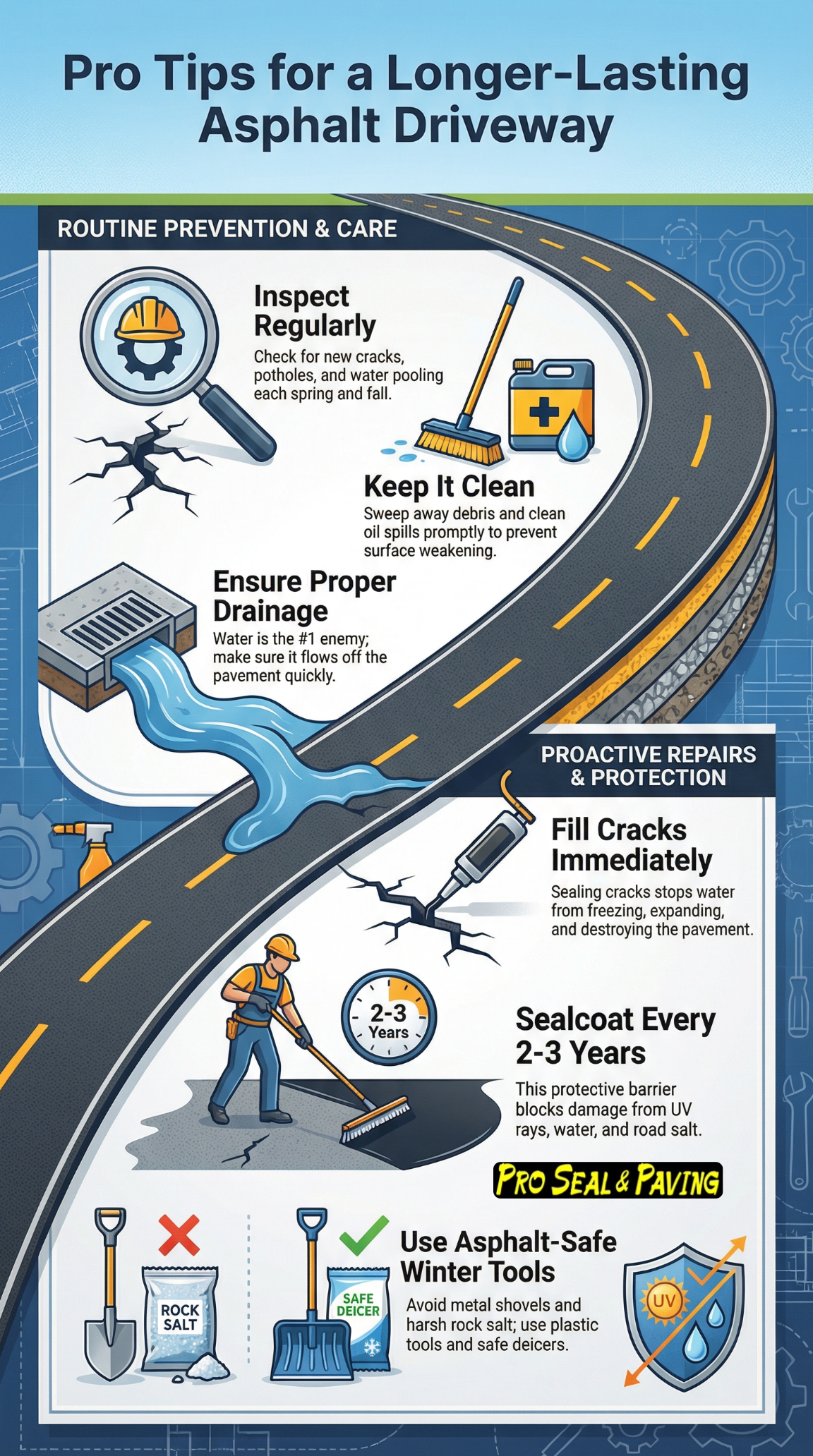
With the challenging seasonal swings in Genesee County, including freezing winters and wet springs, proactive maintenance extends the life of your pavement, saves money on repairs, and keeps your driveway safe and attractive.
Here are practical, effective maintenance strategies that make a real difference:
1. Inspect Your Driveway Regularly
A quick driveway check at least twice a year, ideally in spring and fall, helps you catch issues early. Look for small cracks, emerging potholes, irregular edges, or areas where water pools. Detecting trouble early allows you to fix it before it becomes costly.
2. Clean the Surface Often
Dirt, leaves, and debris trap moisture against the asphalt. That moisture can weaken the surface and accelerate cracking. Regular sweeping or hosing removes debris and prevents water from being held against the pavement. For stains like oil or grease, use a mild cleaner oil weakens asphalt if left untreated.
3. Keep Water Moving Off the Pavement
Water is the driveway’s enemy. Standing water seeps into small cracks and, in colder months, worsens them through freeze-thaw expansion. Keep gutters and downspouts clear, and ensure your driveway continues to shed water effectively by checking for low spots where puddles form. Fixing these drainage issues early prevents significant damage.
4. Fill Cracks Promptly
Cracks might seem minor, but they’re entry points for water. Once water gets in, freeze-thaw cycling expands cracks and speeds deterioration. Fill cracks with a quality crack sealer as soon as you notice them. Pro sealing methods can extend pavement life by years and reduce pothole development.
5. Sealcoat Every Few Years
Sealcoating is one of the most effective ways to protect pavement from moisture, UV rays, and winter salt. It creates a protective barrier that reduces oxidation and limits water infiltration. Most experts recommend sealing every 2–3 years, especially in climates with harsh winters like ours. Timing is key for sealcoating in the late spring through early fall, when temperatures are warm, to ensure proper curing before winter arrives.
6. Repair Small Potholes Quickly
If left unattended, small potholes grow rapidly, especially after repeated freeze-thaw cycles. Filling potholes quickly with appropriate materials (such as cold-mix asphalt for DIY or professional patching for larger areas) helps prevent the problem from spreading and undermining adjacent pavement.
7. Mind the Edges
The edges of a driveway are often the weakest spots. Avoid driving or parking too close to the edge, as this can cause edge break-off and accelerate cracking. Where possible, landscape the border with grass and topsoil, just below the pavement height, to provide support and improve drainage.
8. Use Asphalt-Safe Snow and Ice Practices
Winter brings snow and ice, but how you manage it matters. Remove snow promptly with plastic shovels or driveway-safe snow blowers instead of metal tools that can gouge asphalt. Avoid harsh rock salt, which can accelerate degradation choose asphalt-safe deicers or sand to enhance traction without damaging the surface.
9. Avoid Chemical Spills and Heavy Loads
Oil, gas, and transmission fluid soften asphalt and make it more susceptible to water penetration. Clean spills quickly with a gentle cleaner. Also, avoid long-term parking of heavy vehicles in the same spot whenever possible concentrated weight can stress the pavement and lead to depressions or cracking.
10. Schedule Professional Checks When Needed
Even with great DIY care, periodic professional evaluations help identify issues you might miss. A paving professional can assess drainage problems, base settlement, or deeper structural issues before they become major repair projects.
Why Maintenance Matters
Asphalt is a durable material, but it’s not self-repairing. Regular maintenance keeps water out, prevents oxidation, and preserves flexibility, helping your driveway resist cracks, potholes, and premature aging. By following these tips, your pavement will handle Genesee County’s freeze-thaw cycles, rain, and hot summers more effectively, preserving performance and saving money in the long term.
Take Action
If you’re planning a residential driveway project in Genesee County, Batavia, Le Roy, Oakfield, Byron, or Alexander, I’d love to help you get it right the first time.
At Pro Seal & Paving, we combine local experience with quality materials and precision installation to deliver driveways that last through our most brutal winters.
Contact us today to schedule your free driveway evaluation. We’ll walk your property, assess soil and drainage, and design a solution that gives you peace of mind and lasting performance.
Build smart. Pave right. Protect your investment.

Owner of PRO SEAL & PAVING
17+ years experience