
BLUF:
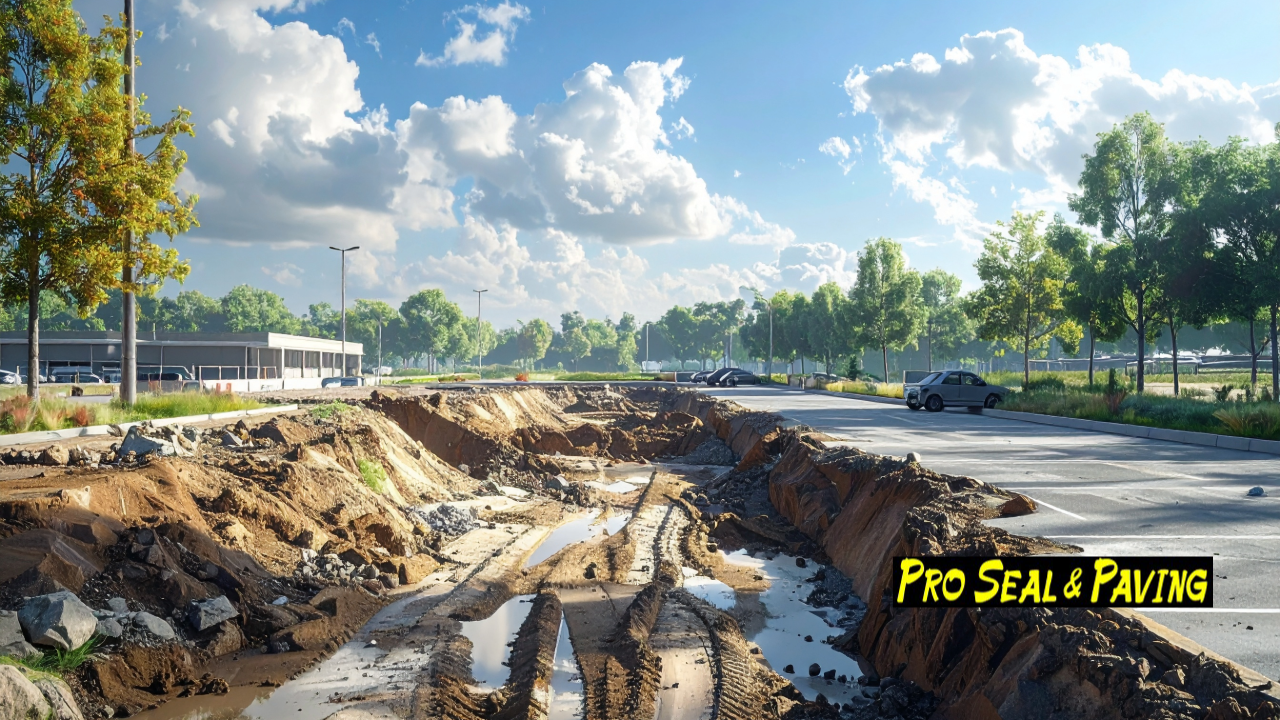
In Orleans County, where rain seasonal snowmelt and variable soil conditions are part of everyday life, site clearing and grading are the foundational steps that determine how long your driveway or parking area will last. Without careful preparation of the land, water undermines pavement, frost heave cracks surfaces, and erosion weakens the base—leading to frequent repairs and shortened life. Proper clearing and grading create stable ground and effective drainage that dramatically increase durability, performance, and long-term value.
Table of Contents
Introduction
Your driveway or parking area is more than just a place to park; it’s a structural component of your property that faces Nature’s toughest tests every day. In Orleans County, where rainstorms, seasonal snowmelt, and shifting soil conditions are part of life, what lies beneath the pavement matters just as much as the surface you drive on. Too often, I see driveways and parking lots fail not because of poor paving materials but because the land underneath was never prepared to manage water properly.
Water is the enemy of durable pavement. When rainwater or melting snow can’t drain away, it pools and seeps into the base layers, weakening the foundation that supports asphalt or concrete. Over time, this leads to cracking, potholes, erosion, and costly repair problems that could have been prevented with proper site clearing and grading. Even small changes in slope or neglected debris left in the soil can turn a perfectly good surface into a maintenance headache.
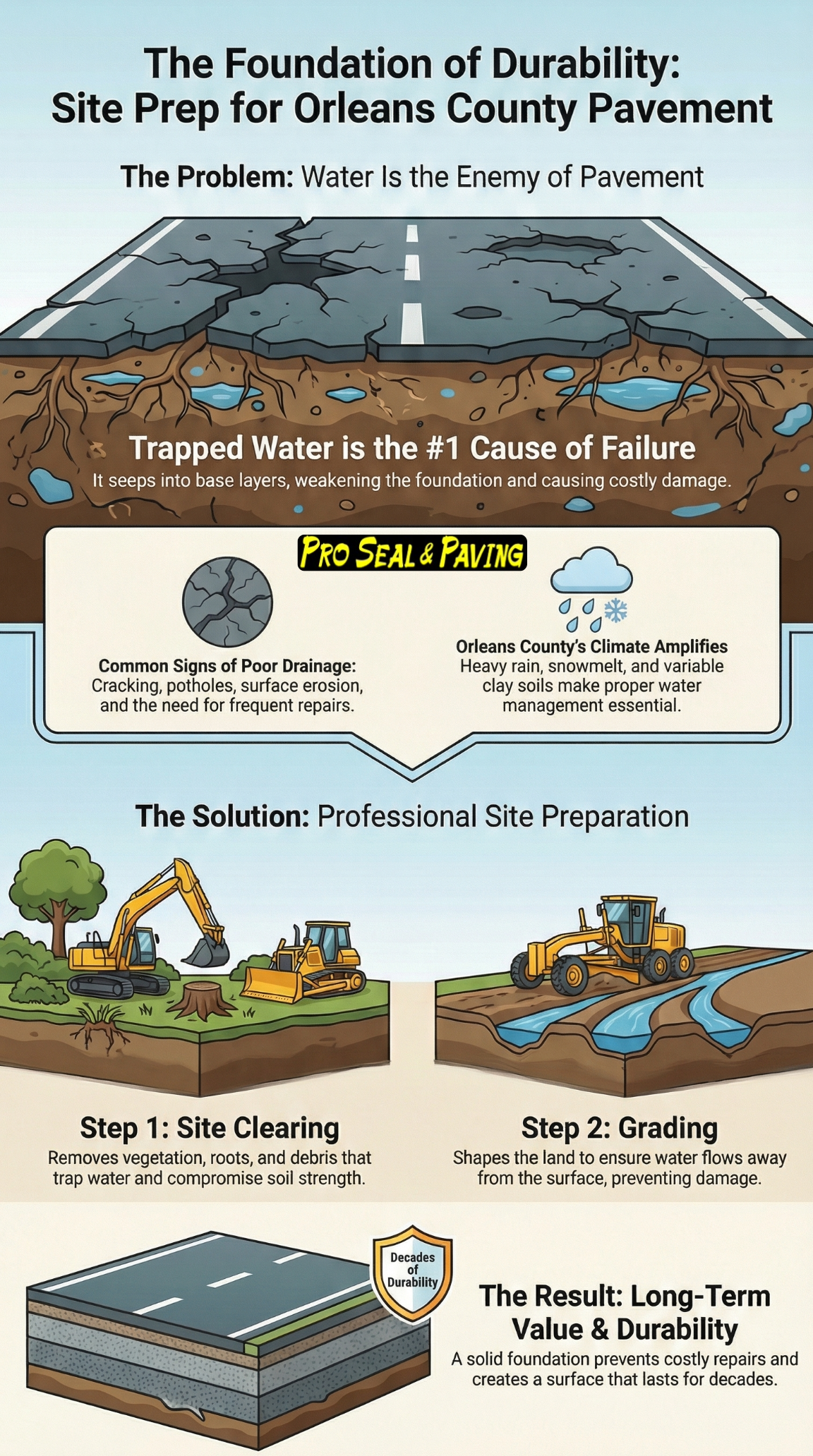
Site clearing and grading aren’t just construction jargon; they are the essential first steps in building a driveway or parking lot that lasts. Clearing removes vegetation, roots, and debris that trap water and compromise soil strength. Grading shapes the land so water flows away from the surface instead of collecting where it causes damage. Without these foundational steps, even the best paving materials are fighting a losing battle against water infiltration, erosion, and freeze-thaw damage.
In Orleans County, whether in Albion, Medina, Holley, or Kendall, local soil types and weather patterns demand tailored solutions, not one-size-fits-all fixes. Heavy clay soils retain moisture long after a storm, while gravelly patches shed water quickly but erode without proper stabilization. Understanding these local conditions is what separates a surface that fails after a few winters from one that stands strong for decades.
In this article, I’ll walk you through why site clearing and grading matter, how they affect water movement and soil stability, and the difference professional preparation makes in the long-term performance of your driveway or parking area. By the end, you’ll see why investing in proper land preparation isn’t an optional extra; it’s an investment in durability, safety, and peace of mind for your Orleans County property.
Chapter 1: Why Site Clearing Matters Before Any Paving
What Site Clearing Actually Involves
When I walk a property before driveway or parking lot work begins, clearing isn’t about mowing grass or trimming bushes. Professional site clearing means removing all obstacles that compromise grading and pavement performance. That includes trees, stumps, brush, soft topsoil, remnants of old pavement, and buried debris. It also includes carefully assessing the quality of the soil beneath — whether it’s dense clay, loamy fill, or silt because soil type dramatically affects how water moves and how well the pavement base supports loads.
In Orleans County, where soil conditions can vary widely from gravelly loam near lake edges to heavy clay inland, clearing the right amount of organic material and unstable soil is critical. Leaving vegetation roots or soft topsoil intact can lead to settling and failure down the line, because vegetation breaks down over time, leaving voids, and soft soils compress under load, causing pavement to sag or crack.
The Hidden Risks of Poor Clearing
Skipping or rushing site clearing might save money upfront, but it costs you later, especially in climates where seasonal rain and snow soak into the ground and create moisture-related problems. When roots, debris, or soft soil remain, they trap water. When winter comes, and moisture freezes, that trapped water expands and creates stress beneath the pavement surface. This often leads to frost heave and cracks that develop into potholes or uneven pavement long before the material reaches its lifespan. Without proper clearing, even the best asphalt or concrete can fail prematurely.
In Holley or Albion, I’ve seen projects where the driveway looked fine the first year, but hidden roots and soft soils allowed water to pool beneath the surface. By year three, cracks had spread, and the edges were undermined. Removing these problems during site clearing isn’t just good practice; it’s essential preparation for a durable, long-lasting surface.
Chapter 2: How Grading Shapes Drainage and Longevity
Why Grading Is More Than Leveling Ground
Grading is the next step after clearing, and it’s one of the most critical factors in how long a driveway or parking lot lasts. Grading isn’t simply about making the land flat, it’s about creating a precise slope that directs water away from the pavement and structures, instead of letting it pool or seep under the surface. Without proper grading, water becomes the enemy of pavement, driving erosion, cracking, and base weakening.
In Orleans County’s wet conditions, grading typically involves a slight crown and a gentle arch in the surface that encourages rainwater and snowmelt to shed off to the sides and toward designed drainage areas. Without this slope, water collects in low spots and begins to undermine the base layers, weakening them and creating uneven settlement. This is especially critical for parking lots, where heavy use and vehicle turning forces add additional stress to the surface.
Grading and Soil Stability
The success of grading depends heavily on the underlying soil stability. Poor soil types, such as certain clays or silt, can absorb too much water, remain saturated longer, and shift under load. To prevent this, part of grading includes adjusting slopes so that water passes quickly through surface layers, and combining this with compaction and proper base materials so soils don’t move after installation.
For example, in Medina properties near agricultural fields, topsoil might be soft and rich but not suitable to support heavy pavement. In those situations, we clear topsoil and replace it with engineered fill and base materials that support traffic loads and promote drainage rather than soil saturation.
Flood Prevention and Pavement Health
Effective grading doesn’t just make water drain it reduces foundation issues for nearby structures and keeps water from washing soil away from beneath the pavement edge. When grading is ignored, water travels unpredictably, and during heavy rains or spring melts, it can wash out sub-base materials, creating voids that display as cracks and potholes on the surface. Grading gives water a predictable path, safeguarding the durability of your driveway or parking area even during severe weather, common in Orleans County’s seasonal climates.
Chapter 3: The Effects of Poor Preparation on Orleans County Driveways and Lots
Common Problems from Neglected Clearing and Grading
When site work is incomplete or improper, homeowners and business owners in Orleans County see a range of issues that shorten pavement life. These include:
- Water pooling on the surface, leading to saturation and accelerated cracking.
- Edge failure, where the shoulder of the driveway or lot collapses because water eroded the soil underneath.
- Potholes and ruts form quickly after winter ice and thaw cycles.
- Uneven surfaces that become trip hazards or damage vehicles.
Even newer installations can fail prematurely if subgrade soils were not evaluated and corrected before grading. In many cases, what looks like a surface issue is actually a subsurface problem; water entering below the pavement weakens the base, and the surface shows the damage.
Local Weather and Seasonal Impacts
Orleans County’s climate with rain, snow, and freeze-thaw cycles amplifies grading problems. Water that stays on or under the surface during freezing conditions expands and contracts, tearing at pavement and base layers. Without proper site clearing and grading to promote drainage, these cyclical stresses can quickly turn small cracks into significant problems. Grading that doesn’t account for seasonal water flow patterns allows moisture to collect where it causes the most damage near the base and joints of driveways and parking areas.
This is why you’ll notice better performance where professional grading was used: consistent drainage keeps water moving off surfaces, reduces freeze-thaw damage, and keeps base layers strong year after year.
Chapter 4: How Professional Site Work Enhances Durability in Orleans County
What Professional Grading Looks Like
Professional site clearing and grading begin before the paved surface goes down and they continue even after grading slopes are established. Grading professionals analyze existing water flow, precisely measure slopes, and consider soil types and conditions specific to Orleans County properties. The goal isn’t just a flat surface but a functioning system that manages water year-round.
On residential driveways near Holley, for instance, grading might include a slight camber and side ditches that direct water toward storm drains or natural dispersal areas. In commercial settings near Albion or Medina, parking lots may require engineered swales or retention shoulders to move runoff without damaging landscaping or adjacent structures.
Site Clearing Combined with Grading
When clearing and grading are done in tandem, they result in a stable, durable base ready for paving. Clearing ensures no organic material or debris remains that could degrade over time. Grading ensures that the land’s surface will shed water rather than collect it. Together, they help prevent surface water infiltration that leads to common pavement problems like cracking and potholes.
Long-Term Cost Savings
Proper clearing and grading aren’t just best practices; they are smart financial decisions. Investing in expert grading and base preparation can save Orleans County homeowners thousands over the years. By preventing chronic drainage problems, frequent patching, or premature reconstruction, proactive site work maximizes your driveway or parking lot’s lifespan and reduces maintenance costs.
Good grading also protects surrounding investments, such as landscaping, walkways, and foundations. Water directed away from these areas helps avoid erosion and structural threats that otherwise result from uncontrolled runoff.
Final Thoughts
Driveways and parking lots are only as durable as the ground beneath them. In Orleans County, where water and weather constantly challenge pavement surfaces, professional site clearing and grading are not optional; they are essential. When done correctly, they enhance durability, promote adequate drainage, and extend pavement life. If you’re planning a paving project, never skip site preparation; it’s where long-term performance begins.
If your driveway or parking lot is cracking, sinking, or holding water, the problem likely started below the surface. Proper site clearing and grading can prevent costly repairs before they begin.
Contact our team today to schedule a site evaluation and get a durable, drainage-ready foundation built for Orleans County conditions.

Owner of PRO SEAL & PAVING
17+ years experience
Source List
Proper grading promotes drainage and prevents water damage, cracks, and erosion. titaniumexcavation.com
Poor grading leads to uneven surfaces, water pooling, and reduced durability. marshikenterprise.com
Site grading and clearing help establish stable drainage patterns and protect pavement integrity. Patriot Excavating