
BLUF:
For homeowners in Orleans County, NY whether in Albion, Medina, Lyndonville, Holley, or Waterport a long-lasting residential driveway requires careful planning, knowledge of weather and soil conditions, and a professionally executed asphalt installation. Understanding freeze-thaw effects, drainage challenges, and proper maintenance ensures your driveway stands up to Western New York’s demanding seasonal cycles and enhances safety, performance, and curb appeal.
Table of Contents
INTRODUCTION
I’m Joshua Piscitelli, owner of Pro Seal & Paving, and I’ve worked with homeowners throughout Orleans County, NY including Albion, Medina, Lyndonville, Holley, and Waterport to design, install, and maintain residential driveways that endure our unique weather and soil conditions. A driveway is not just pavement it’s a key investment in your home’s functionality, curb appeal, and long-term value.
Orleans County properties face the same harsh seasonal cycles standard to Western New York, including deep snow, frequent freeze-thaw events, and heavy spring moisture. These conditions, combined with variable soil types, can cause some driveways to fail prematurely if not installed with care. In this article, I’ll walk you through what I’ve learned from years of experience, from understanding local weather and soils to planning, installation, and maintenance best practices that help driveways perform reliably year after year.
CHAPTER 1 – Local Weather & Soil Challenges in Orleans County
Western New York Climate and Freeze-Thaw Cycles
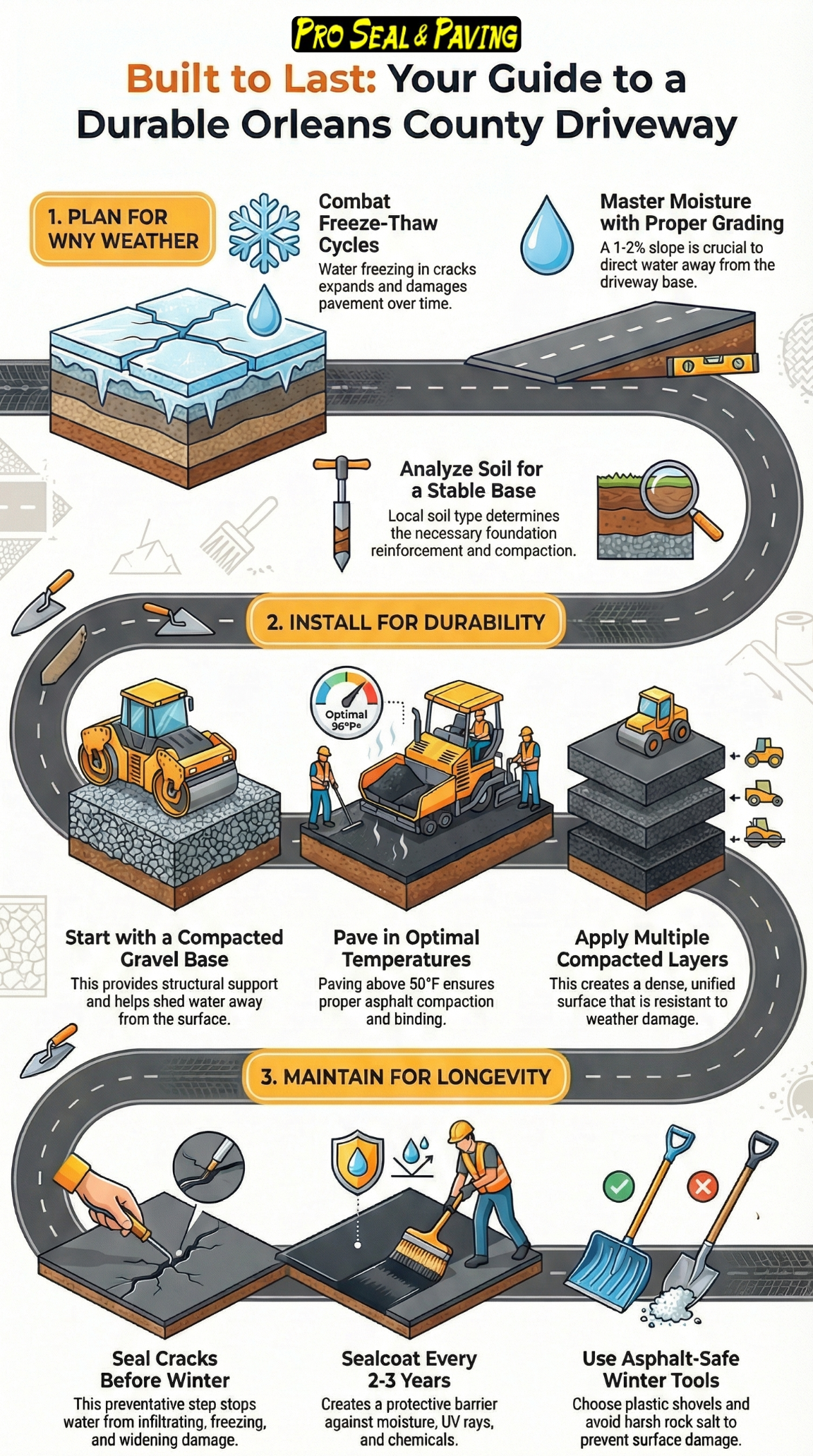
Driveways in Orleans County are constantly challenged by the region’s freeze-thaw cycles. When water infiltrates cracks in asphalt and then freezes, it expands, placing pressure on the pavement. As temperatures rise, the ice thaws and contracts, gradually widening cracks and weakening the structure. Over time, this repeated process, known as frost heaving, can lead to surface failure, cracking, and potholes if not adequately addressed during installation.
Snow and ice management further complicate matters. Snowplows, while essential for clearing roads and driveways, can scrape the surface if the blade is set too low, creating openings for water to enter and accelerate damage. De-icing chemicals, though useful, can also deteriorate asphalt over time, particularly in areas with existing cracks.
Soil Variability Across Orleans County
Under the driveway surface, soils can vary widely even within Orleans County. Some areas around Albion and Medina may have heavier soils with finer particles that retain moisture, increasing the risk of frost heave, while other areas like Lyndonville and Holley may contain soils that drain more freely but may require more compaction support to prevent settling.
Moisture management is therefore a key consideration. Driveways must be graded and designed so that water never sits beneath the pavement, or it will accelerate pavement deterioration during seasonal freeze-thaw periods.
CHAPTER 2 – Planning Your Driveway Project
Site Assessment and Layout
Before any asphalt is laid, I begin by walking the property with the homeowner. Driveway layout, width, entry angle, and intended use all influence how we approach grading and base preparation. In towns like Albion and Medina, properties near lowland areas require careful runoff planning to prevent water from flooding the pavement or the soil beneath it.
A driveway that’s too narrow can make daily use, especially snow removal, more burdensome, while a properly aligned and sized driveway enhances safety and convenience.
Grading and Drainage Design
Proper grading is essential to durability. A driveway must slope slightly typically a 1–2% pitch to naturally move water away from the home and toward designated drainage points. Water that pools or sits along the surface increases the risk of freeze-thaw damage and undermines the asphalt base.
Part of the planning process includes excavating the topsoil and shaping the subgrade to direct runoff efficiently. Where water infiltration risk is high, we may design additional drainage solutions such as swales, French drains, or graded channels to protect the driveway over time.
Soil Evaluation and Permitting
Determining soil type and compaction needs is critical. Soils that retain moisture require different base reinforcement compared with granular soils that drain readily. We look for soft spots, underground utilities, and vegetation that may interfere with long-term stability.
Finally, some Orleans County towns require permits for driveway connections to public roads or for culvert installation. Planning for these requirements before construction ensures the project complies with local ordinances and avoids delays.
CHAPTER 3 – Asphalt Installation and Winter Resilience
Weather-Aware Asphalt Installation
Asphalt performance begins with how and when it’s installed. Temperature matters: paving in conditions consistently above 50°F helps ensure proper compaction and binding, which are essential for a resilient surface. Winter installations often result in weak spots because the mix cools too quickly for adequate compaction.
Layered Structure for Durability
A durable driveway starts with a well-prepared base, usually compacted gravel or crushed stone that provides structural support and helps shed water away from the surface. On top of that, multiple asphalt layers are applied and compacted to create a dense, unified pavement capable of resisting freeze-thaw cycles.
Protection and Winter Best Practices
Once the surface is installed, protective measures like sealcoating help preserve the asphalt against moisture intrusion, UV exposure, and chemical damage. Sealcoating applied in warmer months protects the surface through winter freeze-thaw cycles and extends service life.
When snow arrives, best practices include using plastic snow shovels or snow blowers instead of metal tools that can gouge the asphalt, and choosing asphalt-safe deicers rather than harsh rock salt that can accelerate surface deterioration.
CHAPTER 4 – Maintenance for Long-Lasting Pavement
Your driveway is one of the most visible parts of your home’s exterior — but beyond curb appeal, it’s a key investment in safety and functionality. In Orleans County, where snow, ice, and repeated freeze-thaw cycles are the norm, regular maintenance isn’t optional — it extends the life of your pavement and protects it from the elements. The good news is that many common issues can be prevented or greatly reduced with simple, proactive maintenance.
1. Regular Inspections Catch Problems Early
One of the most effective maintenance habits is simply looking at your driveway regularly — especially in spring and fall. Inspect for small cracks, potholes, soft spots, or areas where water pools. These early signs of wear can tell you a lot about how your driveway is holding up and whether corrective action is needed. According to asphalt maintenance experts, catching issues before they grow prevents much larger and more costly repairs later.
Why It Matters
Even minute cracks allow moisture to enter the pavement. When that water freezes and expands, it widens the cracks and leads to surface failure. Early detection lets you seal or fill cracks before winter sets in.
2. Cleaning Keeps Moisture and Debris from Breaking Down Asphalt
Dirt, leaves, tree sap, and debris aren’t just unsightly — they trap moisture against the asphalt surface and promote deterioration. Regular sweeping or gentle hosing keeps your driveway cleaner and makes it easier to spot developing issues.
Quick Tips
- Sweep debris away monthly during the growing season.
- Remove grass clippings after mowing.
- Clean oil or chemical spills promptly, as automotive fluids can soften asphalt and make it more prone to water infiltration.
3. Crack Sealing and Pothole Repairs Stop Water Infiltration
Even small cracks are entry points for water. Left untreated, they allow moisture to penetrate and expand during wet seasons and freeze-thaw cycles. Filling cracks with a quality sealant and repairing potholes as soon as they appear are among the most cost-effective maintenance strategies.
When to Act
- Seal visible cracks before winter.
- Patch potholes as soon as they appear to prevent them from getting worse.
- Consider professional crack sealing for larger or widespread cracking.
4. Sealcoating Provides a Protective Shield
Sealcoating your driveway adds a protective surface layer that guards against water infiltration, sunlight oxidation, and chemical damage from salt or auto fluids. Most experts recommend a sealcoating application every 2–3 years in climates with harsh winters, like Orleans County’s.
Best Timing
Apply sealcoat in late spring through early fall when daytime temperatures are consistently above 50°F so the material can cure properly before cold weather arrives.
5. Keep Drainage Moving Away From the Surface
Water is asphalt’s enemy, especially in zones where it repeatedly freezes and thaws. Proper drainage prevents standing water and directs runoff away from the pavement surface. In maintenance terms, this means:
- Making sure gutters and downspouts don’t direct water onto the driveway.
- Correcting low spots where water pools.
- Clearing debris from drainage paths.
Even small pooling areas should be addressed to reduce freeze-thaw damage and pothole formation.
6. Winter Care Matters Too
Winter is when asphalt takes its hardest hits. Snow and ice expand existing cracks, and plowing or shoveling can inadvertently scrape the surface. To protect against winter damage:
- Use plastic shovels or snow blowers instead of metal tools that can chip the surface.
- Shovel early and often before snow compacts and turns to ice.
- Choose asphalt-safe deicers (e.g., calcium chloride). Harsh rock salts can accelerate cracking and surface breakdown.
Clearing snow and ice promptly and correctly helps reduce moisture exposure and winter wear.
7. Edge Protection and Heavy Loads
The edges of a driveway are often the weakest points. Driving or parking too close to the edge can cause break-off and premature cracking. Landscaping the border with grass and topsoil just below the pavement height can help support edges and improve drainage.
Likewise, avoid parking heavy vehicles in the same spot all winter — concentrated weight can stress the asphalt, especially when the ground beneath is frozen.
8. Professional Checkups Amplify Your Efforts
Even with great DIY care, occasionally having a professional evaluate your driveway ensures nothing is overlooked. Pros can spot early signs of base settlement, deeper structural issues, or subtle drainage problems you might miss on your own.
Summary
Maintenance isn’t just a surface-level concern — it’s a strategic investment. Regular inspections, cleaning, crack sealing, sealcoating, and competent winter care keep your driveway functioning well through Orleans County’s freeze-thaw cycles and seasonal moisture. A proactive approach saves money, prevents major repairs, and keeps your pavement looking and performing at its best year after year.
If you’re in Orleans County, whether in Albion, Medina, Lyndonville, Holley, or Waterport, and you’re planning a new driveway or need help maintaining your existing pavement, let’s talk. At Pro Seal & Paving, we combine local expertise with quality materials and techniques designed for our unique Western New York climate.
Contact us for a free driveway evaluation today we’ll assess your site, explain your options, and create a plan that protects your investment now and for years to come.

Owner of PRO SEAL & PAVING
17+ years experience