
BLUF:
Homeowners in Orleans County, NY, planning land purchases or development for home building should hire professional excavators for septic systems, sewer lines, or main water lines to navigate local regulations, soil challenges, and safety risks effectively, ensuring compliant, cost-effective, and environmentally sound installations.
KEY TAKEAWAY
Homeowners in Orleans County NY must evaluate soil conditions, obtain health department permits, follow separation and depth requirements, and comply with environmental rules before excavating for septic systems, sewer lines, or water mains. Hiring a professional excavator helps prevent safety hazards, system failures, and regulatory fines.
Table of Contents
- Introduction: Key Considerations for Excavation
- Essential Guide to Excavation for Septic, Sewer, and Water Lines
- Chapter 1: Understanding Septic System Installation in Orleans County
- Chapter 2: Navigating New Sewer Line Installations
- Chapter 3: Main Water Line Installation Essentials
- Chapter 4: Environmental and Safety Factors Across Projects
- Why You Need a Professional Excavator
Key Considerations for Excavation in Home Building and Land Development in Orleans County, NY
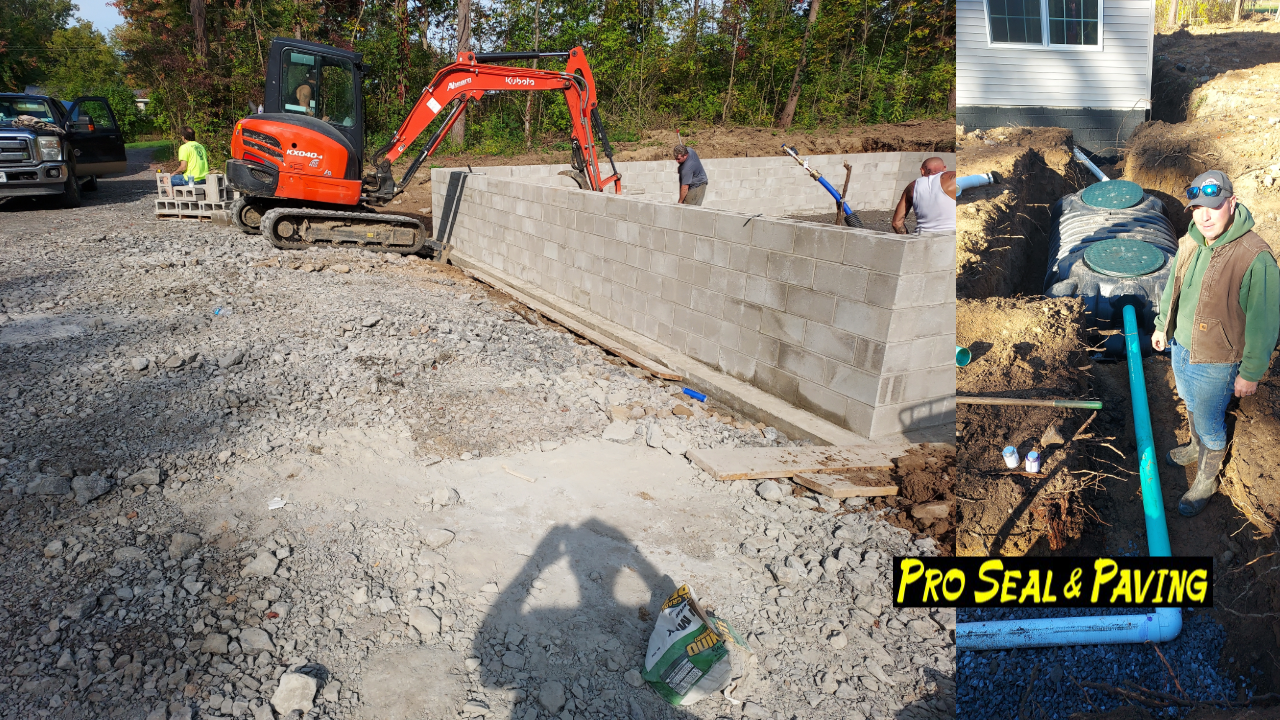
As Josh Piscitelli, owner of Pro Seal & Paving, I’ve spent years helping homeowners across Orleans County navigate the complexities of land development. If you’re planning to buy land or develop your property in areas like Albion, Medina, Holley, or rural spots such as Barre or Carlton, installing a septic system, new sewer line, or main water line often requires careful excavation.

Research suggests these projects involve key factors like soil suitability, regulatory compliance, and safety to avoid environmental risks or costly setbacks. It seems likely that hiring a professional excavator is essential due to the specialized equipment and expertise needed, especially given local variations in topography and utility access.
Soil and Site Evaluation Before any digging, assess soil types—often loamy or sandy in our county—which affect percolation rates and system design. Evidence leans toward conducting percolation tests to ensure proper drainage, as poor soils can lead to system failure.
Regulatory Permits and Separations Local health departments require permits, with separations like 100 feet from wells for absorption fields to prevent contamination. This acknowledges the complexity of balancing development with environmental protection.
Costs and Timelines Expect $3,500–$20,000 for septic installations, with timelines of weeks to months, including permitting. These figures highlight potential financial impacts, varying by site conditions.
Environmental and Safety Factors: Consider wetlands, floodplains, and calling 811 to mark utilities. Professional handling reduces risks such as cave-ins and pollution.
Why Hire a Professional Excavator? Professionals ensure compliance, use proper equipment, and minimize damage—crucial in our flat to rolling terrain, where improper excavation could lead to erosion or utility hits.
For more details, including area-specific insights, see the comprehensive guide below.
Essential Guide to Excavation for Septic, Sewer, and Water Lines in Orleans County, NY
As Josh Piscitelli, owner of Pro Seal & Paving, I’ve worked with countless homeowners in Orleans County who are building homes or developing land. Whether you’re in the Village of Albion, Medina, Holley, Lyndonville, or out in rural areas like Barre, Carlton, Clarendon, Gaines, Kendall, Murray, Ridgeway, Shelby, Yates, or hamlets such as Childs, Eagle Harbor, Hulberton, Kent, Knowlesville, Millville, Waterport, Murray Hill, Gaines Basin, Jeddo, Kendall Mills, or Shelby Center, excavation for utilities is a critical step. If you’re considering buying land or already own it and plan to install a septic system, connect to a new sewer line, or run a main water line, there are many factors to weigh. I’ll break it down based on my experience and local regulations, focusing on why professional excavation is non-negotiable for safe, compliant results.
Understanding Septic System Installation in Orleans County
In many parts of Orleans County, especially rural towns like Barre or Carlton, septic systems are the go-to for wastewater management since public sewers aren’t always available. I’ve seen homeowners underestimate the process, leading to delays or failures.
Key Regulations and Permits
Septic installations follow New York State Department of Health standards under Appendix 75-A. In Orleans County, the Genesee and Orleans County Health Departments (GO Health) oversee permits. You need approval before starting—whether for a new system, repair, or replacement. For example, a state-licensed engineer must design systems for new homes or major upgrades. Permit costs vary but may include inspection fees.
Site and Soil Considerations
Orleans County’s topography is mainly flat to gently rolling, part of the Lake Ontario plain, with soils ranging from loamy to sandy or mucky in low areas. Conduct percolation tests (at least two per area) to measure drainage rates of 1-60 minutes per inch are ideal for conventional systems. Poor soils (e.g., clay-heavy) may require alternatives like mounds. Also, ensure at least 4 feet of usable soil above bedrock or groundwater to prevent contamination. I’ve advised clients in flood-prone spots near streams to divert surface water with berms.
Design and Installation Factors
System size depends on the number of bedrooms (e.g., a 1,000-gallon tank minimum for 1-3 bedrooms). Separations are crucial: 100 feet from wells for absorption fields, 50 feet from streams. Excavation involves digging trenches 18-30 inches deep, avoiding frozen or wet conditions to prevent smearing. Timelines? Permitting takes 2-4 weeks, installation 1-2 weeks, but weather can extend it.
Costs and Potential Challenges
From my projects, septic costs range from $3,500-$20,000, averaging $8,000-$15,000 locally, including excavation. Add $345-$400 for pumping every 3-5 years. Challenges include high groundwater in areas like Waterport—mitigate with raised systems.
Navigating New Sewer Line Installations
If you’re in villages like Albion, Medina, Holley, or Lyndonville, public sewers may be available, making connections more straightforward than full septics. Rural hamlets like Eagle Harbor often rely on private systems.
Availability and Requirements
Public sewers exist in villages (e.g., Albion Village system), but towns like Shelby may require extensions. Check with local public works—e.g., Orleans County DPW for grants. New lines need 4 feet of cover, sloping for gravity flow, and permits from GO Health or villages.
Excavation Considerations
Trenching for sewers requires precision: 4-10 feet deep, avoiding utilities (call 811 always). In our county’s soils, erosion is a risk—use shoring for trenches over 5 feet. Separations: 10 feet horizontal from water lines, 18 inches vertical.
Why It Matters for Homeowners
Connecting to public sewer avoids long-term septic maintenance but involves upfront fees. Timelines: 1-5 days for installation, but permitting adds weeks. Costs: $5,000-$15,000, depending on distance to main.
Main Water Line Installation Essentials
Water access varies—public in villages, private wells in rural areas like Gaines or Kendall.
Regulations for Homeowners
Follow NY Plumbing Code: Lines at least 12 inches below grade, 6 inches below frost line (about 4-5 feet here). Public systems in Albion or Medina require connections; elsewhere, wells need DEC-registered drillers.
Key Considerations
Excavate 4-10 feet deep, ensuring 10 feet separation from sewers. Soil stability is key—our loamy soils compact well but watch for rocks. Test for contamination; anchor lines in wet areas.
Timelines and Costs
Installation: 1-3 days, but permits 1-4 weeks. Costs: $2,000-$10,000 for lines, plus well drilling if private ($5,000+).
Environmental and Safety Factors Across Projects
Orleans County’s environment demands care: Avoid wetlands (common in Yates), control erosion with geotextiles, and manage spoils 2 feet from edges. Call UDig NY (811) to mark lines—fines for hits are steep. Safety: Shore deep trenches per OSHA.
| Factor | Septic System | Sewer Line | Water Line |
|---|---|---|---|
| Typical Depth | 18-30 inches (trenches) | 4-10 feet | 4-5 feet (below frost) |
| Separation from Wells | 100 feet (absorption) | 10 feet (encased if closer) | 50-100 feet |
| Soil Suitability | Percolation 1-60 min/inch | Stable for sloping | Compactable, no rocks |
| Environmental Risk | Groundwater contamination | Erosion, utility damage | Leakage to aquifers |
| Average Cost | $8,000-$15,000 | $5,000-$15,000 | $2,000-$10,000 |
Why You Need to Hire a Professional Excavator
I’ve seen DIY attempts fail spectacularly—damaged utilities, non-compliant depths, or cave-ins. Professionals like us at Pro Seal & Paving have the expertise for site assessments, heavy equipment (e.g., backhoes), and compliance with NY codes. We minimize erosion, ensure precise grading, and handle permits, saving you time and money. In our terrain, improper work can lead to flooding or fines—hire pros for safety and peace of mind.
If you’re in Orleans County and ready to start, contact me at Pro Seal & Paving. We’ll guide you through every step.
Planning a septic system, sewer connection, or water line in Orleans County?
Talk with PRO Seal & Paving before you dig.
✔ Local Orleans County excavation experience
✔ Septic, sewer, and water line specialists
✔ Permit and inspection coordination
✔ Safety-focused and code-compliant
Contact PRO Seal & Paving today and build with confidence.
Key Citations:
- New York State Department of Health – Septic Systems
- Residential Onsite Wastewater Treatment Systems Design Handbook
- Private Water Wells & Septic Systems – Genesee County, NY
- New York State Septic System Regulations
- Your Septic System – Cornell University
- UDig NY – Planning to Dig?
- Septic System Installation Cost
- Orleans County Contact Report 2024
- State Approves $8 Million in Water Grants
Owner of PRO SEAL & PAVING
17+ years experience