ARE YOU ASKING THE RIGHT QUESTIONS?
Do freeze thaw cycles and harsh weather keep damaging your asphalt driveway?
Do you want a smooth, durable driveway built to last in Western New York?
Is your driveway cracked, uneven, or hurting your home’s curb appeal?
Is Your Asphalt Starting to Fade, Crack, or Wear Down?
If your driveway or parking lot is turning gray, developing surface cracks, or absorbing water, your asphalt is unprotected. Once moisture, salt, and UV rays penetrate the surface, deterioration accelerates quickly. Sealcoating acts as a protective barrier, helping prevent costly repairs and premature replacement.
Our sealcoating services are designed to stop damage early and preserve asphalt before problems become expensive.
Our sealcoating services are designed to stop damage early and preserve asphalt before problems become expensive.
What Is Sealcoating and Why It Matters
Sealcoating is a liquid asphalt based coating applied to existing pavement. Once cured, it forms a protective layer that shields asphalt from water intrusion, oxidation, oil stains, chemicals, and sun exposure. This protection is especially important in Western New York, where freeze thaw cycles and winter road salt cause rapid pavement breakdown.
Proper sealcoating helps maintain structural integrity while restoring a rich, clean black finish.
Proper sealcoating helps maintain structural integrity while restoring a rich, clean black finish.

Protect. Preserve. Extend. Enhance.
Residential Sealcoating Services
Your driveway is one of the most visible features of your home. A sealed driveway not only improves curb appeal but also protects against cracking, erosion, and early failur
Our residential sealcoating services help homeowners:
- Extend driveway lifespan
- Reduce cracking and surface wear
- Prevent water damage and freeze damage
- Maintain a clean, like-new appearance
- Lower long-term maintenance costs
We take the time to properly prepare each surface so your driveway receives maximum protection and long-lasting results.
Protect Pavement. Reduce Liability. Build Trust.
Commercial Sealcoating Services
A parking lot is often the first thing customers and tenants see when arriving at your business. Faded, cracked asphalt sends the wrong message and increases safety and liability concerns.
Our commercial sealcoating services help businesses:
- Protect high-traffic asphalt surfaces
- Improve first impressions and curb appeal
- Reduce surface deterioration and pothole formation
- Extend pavement service life
- Maintain safer driving and walking areas
From small business lots to larger commercial properties, we apply professional-grade sealcoating built to withstand heavy use.
Process First. Protection Follows.Our Sealcoating Process
Our sealcoating process is designed to do more than make asphalt look better. By carefully inspecting, repairing, cleaning, and professionally sealing each surface, we ensure maximum adhesion, long lasting protection, and a finish that stands up to traffic, weather, and time.
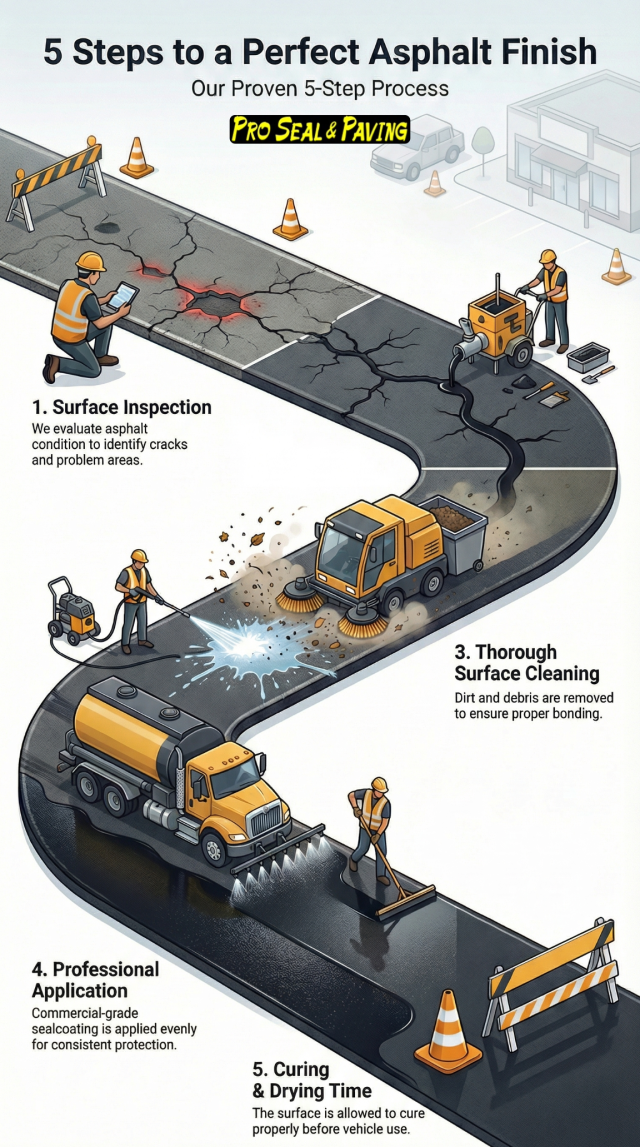
We follow a proven process to ensure proper adhesion, coverage, and performance:
- Surface Inspection
We evaluate asphalt condition to identify cracks, wear, and problem areas. - Crack Filling and Minor Repairs
Cracks and small surface defects are repaired before sealing. - Thorough Surface Cleaning
Dirt, debris, and contaminants are removed to ensure proper bonding. - Professional Sealcoating Application
Commercial grade sealcoating is applied evenly for consistent protection. - Curing and Drying Time
The surface is allowed to cure properly before use.
SEALCOATING FAQs (Residential & Commercial)
Frequently Asked Questions
These FAQs explain how sealcoating protects asphalt driveways and parking lots, when it is needed, and what to expect, helping residential and commercial property owners across Genesee, Orleans, and Wyoming Counties make informed maintenance decisions.
Click to Open
1. What is asphalt sealcoating?
Sealcoating is a protective layer applied to asphalt to shield it from water, UV rays, salt, oil, and everyday wear.
2. Why is sealcoating important in Western New York?
Freeze thaw cycles, snow, and road salt accelerate asphalt damage, making sealcoating essential for long term protection.
3. Does sealcoating extend the life of asphalt?
Yes, routine sealcoating can significantly extend the lifespan of driveways and parking lots.
4. How often should asphalt be sealcoated?
Most asphalt should be sealcoated every two to three years depending on traffic and exposure.
5. Can sealcoating fix cracks or potholes?
No, cracks and potholes must be repaired before sealcoating is applied.
6. What happens if asphalt is never sealcoated?
Unsealed asphalt dries out, cracks faster, absorbs water, and deteriorates more quickly.
7. Is sealcoating suitable for residential driveways?
Yes, sealcoating is one of the best ways to protect and improve residential asphalt driveways.
8. Is sealcoating recommended for commercial parking lots?
Yes, commercial lots benefit greatly from sealcoating due to higher traffic and liability concerns.
9. How long does sealcoating take to dry?
Most sealcoated surfaces are dry within 24 hours, depending on weather conditions.
10. Can I drive on asphalt immediately after sealcoating?
No, vehicles should stay off the surface until curing is complete.
11. Does sealcoating improve appearance?
Yes, sealcoating restores a dark, uniform finish and improves curb appeal.
12. Will sealcoating make asphalt slippery?
No, when applied correctly, sealcoating does not make asphalt slippery under normal conditions.
13. What time of year is best for sealcoating?
Spring through early fall is ideal when temperatures allow proper curing.
14. Can sealcoating be applied in cold weather?
No, sealcoating requires warm, dry conditions to bond correctly.
15. Do you clean the surface before sealcoating?
Yes, proper cleaning is essential to ensure strong adhesion and long lasting results.
16. Do you fill cracks before sealcoating?
Yes, cracks are filled and repaired prior to sealing whenever needed.
17. How long does sealcoating last?
Most sealcoating applications last two to three years with proper care.
18. Does sealcoating protect against oil and chemical stains?
Yes, sealcoating helps resist oil, gas, and chemical damage.
19. Is sealcoating environmentally safe?
Professional sealcoating materials are applied responsibly following industry standards.
20. Can sealcoating help prevent potholes?
Yes, by reducing water intrusion, sealcoating helps prevent pothole formation.
21. Do commercial properties need line striping after sealcoating?
Yes, parking lot lines and markings are typically reapplied after sealcoating.
22. Can sealcoating be done while a business remains open?
Often yes, projects can be phased to minimize disruption.
23. How do I know if my asphalt needs sealcoating?
Faded color, surface dryness, and water absorption are common signs.
24. Is sealcoating a replacement for resurfacing?
No, sealcoating is preventative maintenance, not structural repair.
25. How soon should new asphalt be sealcoated?
New asphalt is typically sealed after it has cured for several months.
26. Does sealcoating increase property value?
Yes, well maintained asphalt improves curb appeal and perceived property value.
27. Can sealcoating reduce long term repair costs?
Yes, routine sealcoating helps avoid expensive repairs and premature replacement.
28. Do you sealcoat private roads and access lanes?
Yes, we sealcoat driveways, parking lots, and private access roads.
29. Do you serve rural properties outside town centers?
Yes, we serve rural and suburban properties throughout the region.
30. What areas do you serve for sealcoating?
We serve Genesee, Orleans, and Wyoming Counties including Batavia, Albion, Warsaw, and nearby towns.
31. How long should I wait before sealcoating an older driveway?
As long as the asphalt is structurally sound, sealcoating can be applied after proper preparation.
32. Does sealcoating help with small surface cracks?
Sealcoating helps slow surface cracking but does not replace crack repair.
33. How do I maintain asphalt after sealcoating?
Avoid sharp turns, heavy loads, and chemical spills, and schedule routine resealing.
34. Is sealcoating worth the investment?
Yes, sealcoating is one of the most cost-effective ways to protect asphalt.
35. How do I schedule sealcoating services?
Contact Pro Seal & Paving to schedule an estimate and plan your sealcoating project.
EXPERTS YOU CAN TRUST
Protect Your Asphalt Before Damage Sets In
Contact Pro Seal & Paving today to schedule professional sealcoating services and keep your asphalt protected, safe, and looking its best.
FAMILY-OWNED BUSINESS IN ALBION, NYContact us now to get quote
Ready to get started? Pro Seal & Paving serves Albion, Batavia, and surrounding counties. Contact us today to schedule your estimate.

RESOURCES
Contact Us
306 Ellicott St Batavia, NY 14020
5309 Eagle Harbor Rd Albion, NY 14411
Hours of Operation
Monday - Sunday 8am - 8pm