
BLUF:
If you are planning a septic system, sewer connection, or water line installation in Wyoming County, NY, your project will succeed or fail before the first shovel hits the ground. Local Health Department permits are mandatory and must be approved before any building permit is issued. Wyoming County’s clay heavy and variable soils demand proper percolation and deep hole testing to avoid drainage failures, backups, or costly redesigns. Environmental realities like high groundwater, wetlands, and a 42 to 48 inch frost depth require precise excavation depths and setbacks to prevent freezing, contamination, or violations. The fastest way to protect your investment and avoid fines, delays, or rework is to hire a professional excavator who understands Wyoming County codes, soil behavior, and site specific risks from day one.
KEY TAKEAWAY
Wyoming County septic, sewer, and water line installations require Health Department permits, soil percolation testing, frost protected excavation depths, and strict environmental setbacks. Professional excavation ensures compliance, prevents system failure, and reduces long term costs.
Table of Contents
Essential Guide to Septic, Sewer, and Water Line Installations for Home Building in Wyoming County, NY
Hi, I’m Josh Piscitelli, owner of Pro Seal & Paving. With years of experience serving homeowners across Wyoming County from Warsaw and Perry to Arcade, Castile, and beyond I’ve seen firsthand how proper planning and professional excavation can make or break a land development project.
If you’re a homeowner planning to buy land or develop your property in areas like Sheldon, Silver Springs, Bennington, Gainesville, Pike, Bliss, Covington, Eagle, Attica, Java Center, Middlebury Center, North Java, South Warsaw, Johnsonburg, Curriers, Wethersfield, or Varysburg, installing a septic system, new sewer line, or main water line is a significant step. These installations always require excavation, and there are key considerations to keep in mind for safety, compliance, and long-term success. In this article, I’ll walk you through what you need to know, drawing from local regulations and best practices, and explain why hiring a professional excavator like my team at Pro Seal & Paving is essential.
Key Considerations
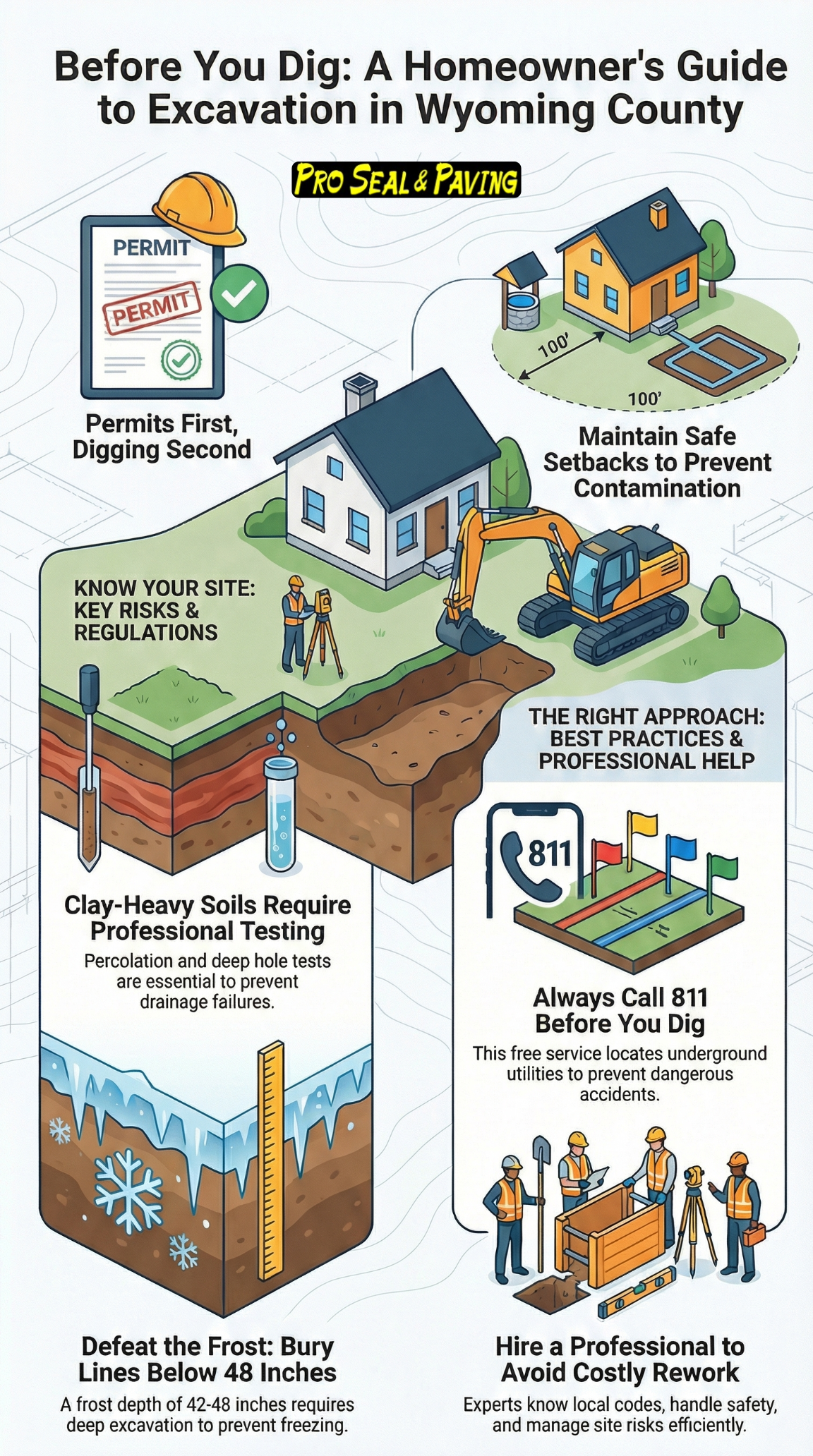
- Research suggests that local regulations require permits from the Wyoming County Health Department for septic and water systems before any building permit is issued, to ensure compliance and avoid fines.
- Soil types in the area are often clay-heavy or loamy, which impacts excavation; percolation tests are essential to assess absorption rates and prevent system failures.
- Environmental factors like wetlands, groundwater levels, and frost depths (typically 42-48 inches in western NY) must be addressed to prevent contamination or freezing.
- Hiring a professional excavator is advisable for safety, precision, and adherence to codes, reducing risks of costly errors or structural issues.
Permits and Regulations
Homeowners should start by obtaining a Sewage Disposal Construction Permit from the Wyoming County Health Department. This involves site inspections and is required before excavation begins. County building permits also mandate detailed plans, especially for utilities.
Site and Soil Assessments
Conduct percolation tests and deep hole evaluations to assess soil suitability. In towns like Warsaw or Perry, variable soil conditions can affect drainage, so professional testing helps identify issues like high water tables early.
Excavation and Installation Tips
Plan for proper depths to protect against frost water lines at least 6 inches below the frost line. Maintain setbacks from wells (e.g., 100 feet for leach fields) to avoid contamination.
Benefits of Professional Help
Pros bring expertise in local codes, heavy equipment handling, and risk mitigation, ensuring efficient, compliant work that saves time and money in the long term.
Chapter 1: Understanding Local Regulations and Permits in Wyoming County
As a resident or potential landowner in Wyoming County, NY, navigating the regulatory landscape is your priority. The Wyoming County Health Department oversees septic and wastewater systems under the New York State Sanitary Code (Appendix 75-A) and the local Wyoming County Sanitary Code. Before any digging starts, you need a Sewage Disposal Construction Permit this is non-negotiable and must be secured before obtaining a building permit from the Wyoming County Building Department or your town’s zoning office.
Permit Application Process
To apply, submit a completed form to the Environmental Health Division at 5362 Mungers Mill Road, Silver Springs, NY. Include fees (e.g., $300 for new builds or replacements, $100 for renewals) and arrange a site inspection. For waivers in cases where standard designs can’t be met due to site constraints, there’s a specific application form. In towns like Warsaw or Perry, where urban-rural mixes exist, additional zoning approvals may apply. Building permits require two sets of construction drawings, specifications, and a plot plan showing lot layout, building placements, and relationships to streets or adjoining properties.
If your project involves public sewers or water, check with local utilities. Many rural areas in Bliss or Eagle rely on private systems. Failure to get permits can lead to fines, stop-work orders, or even excavation to verify compliance after the fact. I’ve helped clients in Attica and Varysburg avoid these pitfalls by coordinating permits early.
Building Codes and Inspections
All work must comply with the New York State Uniform Fire Prevention and Building Code. For home construction over 1,500 square feet, plans must be sealed by a NYS-licensed architect or engineer. Inspections are mandatory at stages like footer excavation (before pouring concrete), foundation walls, rough framing, and completion. In land development, soil test reports classifying soil type and bearing capacity are required, especially for foundations and utilities.
For environmental permits, the New York State Department of Environmental Conservation (DEC) may become involved if your site impacts wetlands, streams, or protected areas near water bodies in Covington or Castile. The Wyoming County Soil & Water Conservation District (WCSWCD) offers guidance on erosion control and holds a General Stream Permit with DEC for stream-related work. Always check for Special Flood Hazard Areas, as Wyoming County requires permits for development in those areas.
Chapter 2: Soil and Site Evaluations: Key to Successful Installations
Wyoming County’s soils vary widely, influencing excavation and system performance. According to SSURGO soil survey data from the National Cooperative Soil Survey, the area features loamy, clay-heavy, and rocky soils think Alfred, Bath, or Honeoye series in upland areas, with alluvial soils near streams in Perry or Arcade.
Soil Testing Requirements
For septic systems, conduct percolation tests: dig 3-4 test holes (1 foot square, 24-30 inches deep) spaced 40 feet apart in the proposed leach field, plus a 6-foot-deep hole for water table and texture assessment. Pre-soak holes the day before and have water ready for testing. Soils must be suitable sand or gravel for dry wells, but heavy clay (common in Sheldon or Gainesville) may require alternative designs to avoid poor drainage and backups.
In my experience with projects in North Java or South Warsaw, high groundwater or impermeable layers can necessitate raised beds or engineered systems. The WCSWCD promotes soil health practices like minimal disturbance and cover crops to prevent erosion during excavation. A professional soil evaluation ensures your system meets the minimum 1,000-gallon tank size for up to four-bedroom homes, with additional capacity as needed.
Environmental Considerations
Excavation can disturb ecosystems, so factor in wetlands (regulated by DEC permits needed for disturbances over 1 acre) and erosion risks. In Pike or Bliss, steep slopes (>15%) require special grading to prevent runoff. Water quality is a priority; the Agricultural Environmental Management (AEM) program, through WCSWCD, helps implement best management practices, such as diversion ditches and sediment basins. For water lines, consider contamination risks and maintain 50-foot setbacks from septic tanks and 100 feet from leach fields.
Frost depth is crucial: in western NY, it’s typically 42-48 inches, so bury water lines at least 6 inches below (around 4-5 feet deep) and sewer lines sufficiently to avoid freezing, per NYS Plumbing Code. In colder spots like Eagle or Java Center, go deeper for safety.
Chapter 3: Excavation Best Practices for Septic, Sewer, and Water Lines
Excavation isn’t just digging it’s precise work tailored to your site’s needs.
Planning the Dig
For septic: Trench depths of 4-6 feet for drain fields, with gravel bedding. Sewer lines require a minimum 4-inch-diameter pipe, properly sloped, with 1.5 feet of vertical separation from water mains at crossings. Water lines require pressure-tested materials, buried 12 inches below grade minimum.
In towns like Curriers or Wethersfield, rocky soils may demand heavier equipment. Always call 811 for utility locates before digging to avoid hits on gas or electric lines.
Safety and Efficiency
Use proper shoring for trenches over 5 feet to prevent collapses. Weather impacts timing, avoid wet seasons in Silver Springs or Bennington to minimize erosion.
| Consideration | Why It Matters | Relevant Towns Example |
|---|---|---|
| Soil Type (e.g., Clay-Loam) | Affects drainage; poor soils lead to failures | Warsaw, Perry, Arcade |
| Frost Depth (42-48 inches) | Prevents pipe freezing/cracking | Castile, Sheldon, Bliss |
| Setbacks from Wells/Streams | Avoids contamination | Gainesville, Pike, Covington |
| Erosion Control (e.g., Silt Fences) | Protects water quality during digs | Eagle, Attica, Varysburg |
| Permit Inspections | Ensures code compliance | Java Center, North Java, Johnsonburg |
Why You Need to Hire a Professional Excavator
- Research suggests DIY excavation often leads to costly errors, with trenching fatalities spiking 160% in 2022 alone, highlighting the hidden dangers of going it alone.
- It seems likely that professionals prevent long-term issues, such as environmental fines or system failures, by leveraging expertise in local soils and regulations potentially saving homeowners thousands in rework.
- Evidence leans toward hiring pros for efficiency and safety, as amateurs frequently overlook utility lines or proper shoring, risking accidents, contamination, or legal penalties that far outweigh initial savings.
As Josh Piscitelli, owner of Pro Seal & Paving, I’ve witnessed countless homeowners in Wyoming County, NY, tempted by the allure of DIY excavation for septic systems, sewer lines, or water mains. On the surface, it promises quick savings, but dig a little deeper (pun intended), and you’ll uncover risks that could turn your dream home into a nightmare. What if a missed utility line floods your property, or an unstable trench causes injury? These aren’t just hypotheticals, they’re real possibilities backed by alarming statistics and local realities.
The High Stakes of Expertise in Wyoming County’s Unique Terrain
Wyoming County’s diverse soils, from clay-heavy in Warsaw to rocky outcrops in Perry, demand nuanced knowledge. Professionals conduct thorough percolation tests and site assessments, ensuring your septic system drains properly without contaminating groundwater. Amateurs might skip these, leading to backups or failures that require expensive fixes.
Prioritizing Safety to Avoid Devastating Accidents
Excavation isn’t child’s play; it involves heavy machinery and depths where cave-ins are a leading cause of construction deaths. By adhering to OSHA standards, pros use shoring and sloping to protect workers and your family, avoiding the tragedies that claimed 39 lives nationwide in 2022.
Unlocking True Cost Savings Through Precision
While DIY might cut upfront costs, errors like over-excavation or improper backfill can lead to delays, fines exceeding $50 per missed inspection, or even environmental penalties from the DEC. Our team’s precise planning for projects across Sheldon and Gainesville minimizes these, delivering efficiency that pays off in the long term.
Comprehensive Care for Sustainable Development
Beyond digging, pros handle erosion control and wetland compliance to safeguard Wyoming County’s natural beauty. This holistic approach ensures your home in Bliss or Varysburg stands on a foundation that’s not just solid, but environmentally responsible.
In essence, hiring a professional isn’t an expense ,it’s an investment in safety, compliance, and success. Reach out to Pro Seal & Paving today; let’s make your land development a story of triumph, not regret.
As the owner of Pro Seal & Paving, serving homeowners across Wyoming County, NY from the rolling hills of Warsaw and Perry to the rural charms of Arcade, Castile, Sheldon, Silver Springs, Bennington, Gainesville, Pike, Bliss, Covington, Eagle, Attica, Java Center, Middlebury Center, North Java, South Warsaw, Johnsonburg, Curriers, Wethersfield, and Varysburg I’ve seen the full spectrum of land development projects. Installing a septic system, new sewer line, or main water line inevitably requires excavation, and while the temptation to handle it yourself might whisper promises of savings, the reality often echoes with risks, regrets, and unexpected costs. Imagine starting with excitement about your new home, only to face a cave-in that injures a loved one or a fine that drains your budget what price would you put on preventing that? In this expanded exploration, I’ll delve into why hiring a professional excavator isn’t just advisable; it’s essential for safety, efficiency, and long-term peace of mind. Drawing from industry data, local regulations, and real-world examples, we’ll uncover the thought-provoking truths behind DIY pitfalls and professional advantages.
The Illusion of DIY Savings: A Risky Gamble with High Stakes
DIY excavation might seem like a straightforward way to cut costs: rent a backhoe, dig a trench, and call it done. But consider this: according to the U.S. Bureau of Labor Statistics and OSHA reports, trenching and excavation fatalities surged from 15 in 2021 to 39 in 2022, a staggering 160% increase, with cave-ins accounting for the majority. Many of these tragedies stem from inadequate protective systems, a common DIY oversight. In New York State, where frost depths range from 42 to 48 inches and soils vary widely, skipping professional expertise can lead to unstable trenches that collapse under pressure. What if your weekend project turns into a life-altering accident? Professionals mitigate these risks with trained operators and insured operations, turning potential disasters into seamless executions.
Beyond immediate dangers, the financial repercussions are eye-opening. Fines for non-compliance with New York State codes or missed inspections can start at $50 and escalate quickly, especially if environmental violations occur. For instance, improper handling of excavated soil in wetland-prone areas, such as near streams in Castile or Covington, could trigger DEC penalties for contamination or erosion, potentially costing thousands. Thought-provoking question: Is saving a few hundred dollars worth the gamble when rework from errors like hitting a utility line can balloon costs by 20-40% or more?
Expertise in Local Conditions: Navigating Wyoming County’s Hidden Challenges
Wyoming County’s terrain isn’t uniform; it’s a mosaic of loamy clays in Warsaw, rocky substrates in Perry, and high groundwater tables in areas like Gainesville or Pike. Professionals like my team at Pro Seal & Paving conduct mandatory percolation tests digging test holes to assess soil absorption and deep evaluations to ensure septic systems function without failure. Amateurs often miss critical setbacks, such as the 100-foot buffer from wells to leach fields, leading to groundwater contamination that affects not just your property but neighboring ecosystems.
Consider the environmental ripple effects: Improper excavation can cause soil erosion, sediment runoff into local waterways, and habitat disruption, exacerbating issues in a county already mindful of its agricultural and natural heritage through programs like the Wyoming County Soil & Water Conservation District (WCSWCD). In projects from Middlebury Center to South Warsaw, we’ve navigated wetlands with DEC-compliant strategies, preventing fines and preserving the land’s integrity. Why risk turning your backyard into an environmental hazard when pros bring insider knowledge of local codes, like those under the New York State Sanitary Code, to ensure sustainability?
| Common DIY Mistakes | Potential Consequences | Professional Prevention |
|---|---|---|
| Failing to locate utilities (e.g., gas, water lines) | Accidental hits causing floods, explosions, or contamination; repair costs $1,000+ | Use 811 call-before-you-dig service and advanced locating tools |
| Inadequate shoring or sloping in trenches >5 ft | Cave-ins leading to injuries or deaths (76% of excavation fatalities) | Adhere to OSHA 1926.652 standards with engineered supports |
| Ignoring soil type and water management | Poor drainage, system backups, or erosion fines from DEC | Site-specific assessments and BMPs like silt fences |
| Over-excavation or improper backfill | Structural instability, costly rework (20-40% added expense) | Precise equipment operation and material handling |
| Skipping permits and inspections | Fines starting at $50, stop-work orders, legal liabilities | Full compliance coordination with county health and building departments |
This table illustrates how seemingly minor oversights compound into major problems, prompting reflection: How much is your family’s safety and the environment’s health truly worth?
Safety and Compliance: Building on a Foundation of Standards
Excavation demands heavy machinery and precise techniques, as excavators maneuver in tight spaces or trenches dug to exact depths for frost protection. OSHA mandates protective systems for excavations over 5 feet, including sloping, benching, or shoring, and safe egress, like ladders, every 25 feet. In New York, additional rules under 12 NYCRR Section 23-4.3 require ramps or stairways in deep digs, emphasizing worker protection. Professionals are licensed, bonded, and insured, shielding you from liabilities that DIYers face head-on.
The human element is profound: Nearly 1 in 5 workplace deaths occurs in construction, with falls and cave-ins prominent. In a recent Perry project, our team safely handled rocky terrain for a septic install, avoiding the errors that plague untrained efforts. Ask yourself: Can you afford the emotional and financial toll of an accident on your watch?
Efficiency and Cost Savings: The Long Game Where Pros Win
Upfront, DIY might save on labor, but hidden costs lurk. Professionals optimize with efficient planning, reducing project timelines and minimizing disruptions, often completing jobs in days that might take amateurs weeks. In Wyoming County, where weather can turn digs into mudfests, pros use weather-resistant strategies to avoid delays. Long-term savings shine: Avoiding mistakes like improper pipe alignment prevents future repairs, which can cost 20-40% more than the original project.
For example, hitting a sewer line during DIY work could lead to cleanup costs exceeding $5,000, plus fines. Our approach in Attica and Varysburg projects has consistently delivered value, proving that expertise pays dividends. Thought-provoking: In a world of quick fixes, isn’t investing in quality the smarter path to enduring success?
Comprehensive Services: From Prep to Preservation
Professionals offer end-to-end solutions: site prep, excavation, installation, backfill, and restoration, while implementing WCSWCD-recommended best management practices (BMPs), such as diversion ditches, to curb erosion. This ensures compliance with environmental regs, protecting Wyoming County’s waterways and soils from runoff that could harm local agriculture or wildlife.
In Bliss or Eagle, where slopes exceed 15%, pros grade meticulously to prevent landslides. DIY often neglects these, risking property damage or ecological harm. By choosing pros, you’re not just building a home, you’re stewarding the land for future generations.
In summary, whether in Wyoming, NY, or any listed town, thorough planning and professional excavation are the bedrock of successful development. DIY might tempt with short-term gains, but the risks to safety, finances, and the environment are too great. Contact me at Pro Seal & Paving for a no-obligation consultation; together, we’ll transform your vision into a secure, sustainable reality.
Key Citations:
- Wyoming County Health Department: Information to Construct or Alter Sewage Disposal System
- Wyoming County Building Permit Application
- SSURGO Soils Data for Wyoming County, NY
- New York State Plumbing Code: Frost Protection
- Wyoming County Soil & Water Conservation District Newsletter
- NYS DEC Environmental Permits
- Understanding and Maintaining Your Septic System (Adaptable Guidelines)

Owner of PRO SEAL & PAVING
17+ years of experience