
BLUF:
In Orleans County, poor drainage isn’t just an inconvenience; it’s a threat to your home’s foundation, landscaping, and long-term value. Effective drainage excavation is the tailored solution that reshapes your land, directs water away from critical areas, and prevents the costly damage caused by standing water, erosion, and basement moisture. Getting drainage solutions right starts with smart excavation planning and execution.
Table of Contents
Introduction
Water is one of the biggest threats to your home, yet it’s something most homeowners don’t think about until it becomes a problem. In Orleans County, where seasonal rains, snowmelt, and fluctuating soil conditions are part of life, unmanaged water around your foundation, yard, or driveway can quietly erode soil, create soggy lawns, and even damage your home’s structure. That’s where drainage excavation makes all the difference. It is the process of reshaping your land and installing systems that move water away from trouble spots before the damage starts.
Over 17 years of working with homeowners across Western New York, I’ve seen countless properties with recurring water issues that could have been prevented with proper excavation and drainage planning early on. Standing water may seem like an aesthetic nuisance at first, but over time, it weakens soil integrity, promotes erosion, and increases the risk of basement moisture and foundation settlement. Professional drainage excavation rewires how your property handles water, giving it a clear, controlled path instead of allowing it to collect and cause damage.
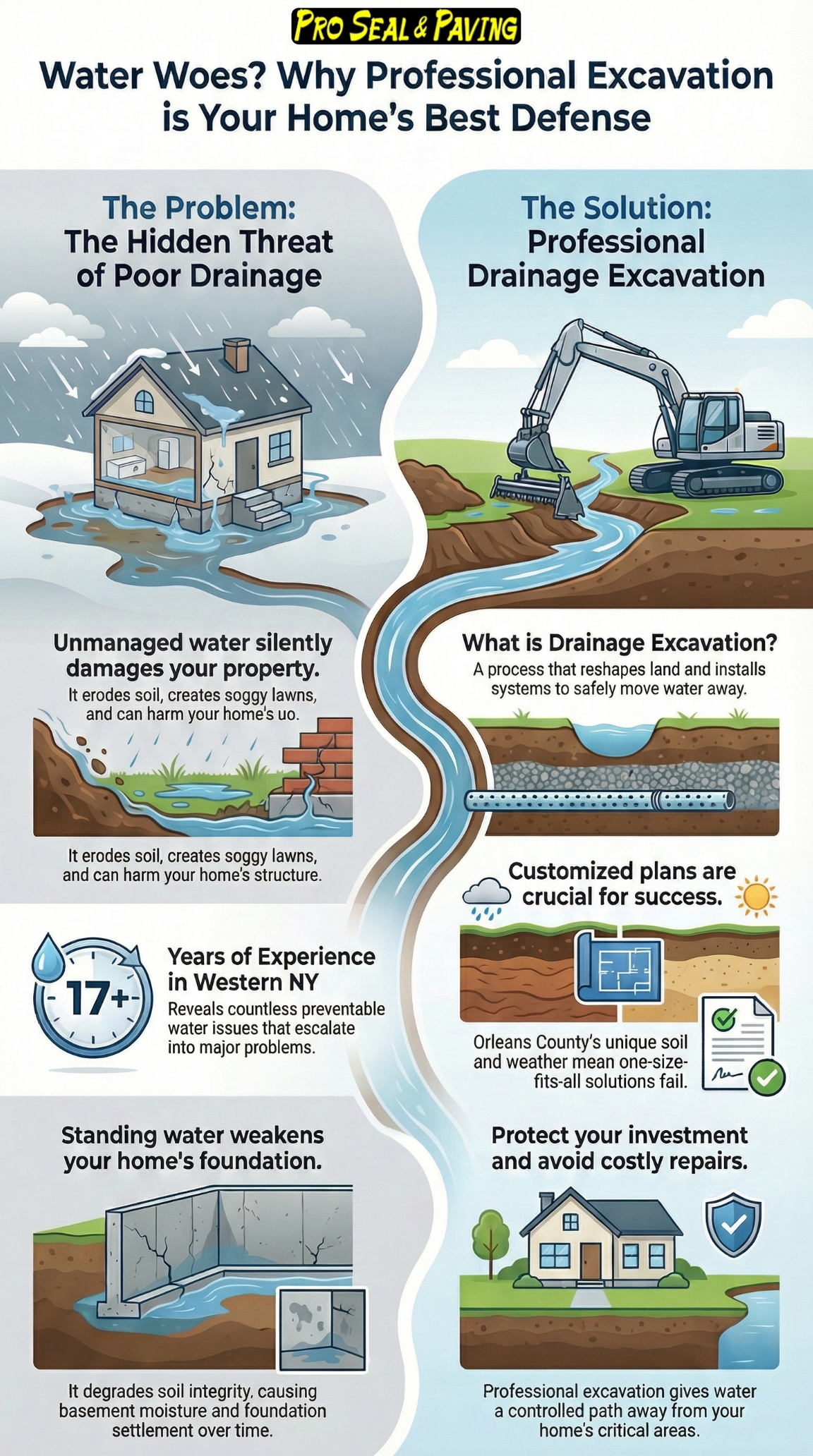
Whether you’re noticing puddles after a heavy rain, worrying about soggy grass near your foundation, or planning future landscaping and structural work, understanding how water flows across your land is essential. In Orleans County, local weather patterns, soil types, and landscape features all influence how water behaves, meaning a one-size-fits-all approach rarely works. Instead, proper drainage starts with a customized excavation plan crafted to your property’s unique conditions.
In this article, I’ll walk you through what drainage excavation really involves, why it matters for Orleans County homeowners, the practical solutions available, and what to expect when working with a professional. With the right approach, you can protect your home, preserve your yard, and avoid costly water-related repairs before they ever start.
Chapter 1: What Drainage Excavation Really Is
Understanding Drainage Problems on Residential Property
Drainage issues show up in many ways: water lingering in low spots after rain, soggy turf, basement seepage, or soil eroding near walkways and foundations. In Orleans County’s mix of clay and loamy soils, water doesn’t always travel where you want it to. Too often, rain and snowmelt collect where they shouldn’t.
That’s where drainage excavation comes in. At its core, drainage excavation is the process of digging, reshaping, and preparing the land so that water flows away from problem areas instead of toward them. This might involve digging trenches, regrading slopes, or installing structures such as French drains or dry wells to move water effectively.
Explaining the Work Involved
When I talk about drainage excavation, I’m not talking about random holes in the ground. The process includes:
- Surveying the site to see where water naturally flows
- Removing soil and reshaping grades so water moves toward safe discharge areas
- Installing drainage systems, such as trenches or subsurface pipes
- Backfilling and finishing so the yard still looks great after work is done
This work isn’t guesswork — it’s technical and tailored to your property’s exact conditions and challenges.
Chapter 2: Why Drainage Solutions Matter in Orleans County
The Cost of Ignoring Drainage Problems
Poor drainage doesn’t stay hidden long. Standing water kills grass, weakens soil, promotes mold growth, and, over time, can damage your home’s foundation. Puddles and soggy spots also attract insects and make your outdoor space less usable.
Left untreated, these problems escalate. Foundation settlement can shift walls and floors. Landscape erosion can wash away plantings and soil that you’ve invested time and money in. The true cost of drainage failures is often seen years after the first wet season — when repairs aren’t merely cosmetic anymore.
Why Orleans County Needs Precision
Orleans County weather brings a mix of heavy on-and-off rain, snowmelt, and saturated conditions. Each of these weather patterns affects how water moves (or doesn’t move) across your property. A drainage plan that works in Florida might fail here because of soil type and freeze-thaw cycles; that’s why a customized excavation approach matters.
Chapter 3: Practical Excavation Solutions for Effective Drainage
Grading and Contouring the Land
One of the most powerful tools for solving drainage problems is grading adjusting the slope of your yard so water flows away from structures and low spots. A gentle grade of just a few inches per ten feet can make a world of difference.
When I help homeowners with grading, we look at the entire property, including roof runoff paths and areas where water collects after rain. The goal is to create a natural exit route for water so it doesn’t sit where it causes damage.
Strategic Drainage System Options
Depending on your property, we may install:
- French drains — perforated pipes with gravel that collect underground water and carry it to a safe outlet.
- Surface drains and trenches — dug channels that collect excess water on the surface and funnel it away.
- Dry wells — pits that allow runoff to sink gradually into the ground rather than pool on the surface.
Each of these systems requires careful excavation so the drainage functions as designed and doesn’t shift or fail with time.
Chapter 4: What to Expect from Professional Drainage Excavation
Detailed Assessment and Planning
When I’m called out to evaluate a property in Orleans County, the first thing I do isn’t start digging it’s assessment and planning. Before any machinery moves soil or trenches are cut, a professional should survey the land to understand how water is currently behaving on your lot. This means looking at where water collects after rain, where slopes might direct runoff toward your foundation, and whether the soil type — clay, loam, or sand will support the drainage solution we plan to install. Professional excavation is rooted in careful study rather than guesswork, ensuring we proceed only after we know exactly what each part of the yard needs. This upfront planning minimizes surprises and helps ensure the drainage work we perform actually alleviates your water problems rather than shifting them to another part of your property.
During the evaluation, we also check for underground utilities and potential obstacles. On any excavation project — especially in older communities common in Orleans County — it’s essential to locate buried cables, pipes, or septic lines so we avoid costly damage or dangerous interruptions. Experienced contractors integrate these checks into the early stages of planning so the excavation process proceeds smoothly and safely.
Execution and Installation of Drainage Solutions
After the land is evaluated and equipment is staged, the real work begins. This isn’t just moving dirt it’s installing solutions that address your specific drainage challenges. For many Orleans County properties, that means combining surface grading with subsurface features to provide a controlled way for water to exit your yard.
Surface grading might involve cut-and-fill techniques where high spots are lowered, and low spots are built up with clean-fill material, both to improve runoff and to create stable, usable lawn space. Trenches for drains or pipes are cut according to planned flow paths and local regulations, ensuring your investment not only solves today’s issues but holds up for decades.
For more complex problems, such as drainage near uphill lots or where groundwater saturation is frequent, we tailor solutions that might include deeper channels, layered gravel beds or combination systems. A professional excavator knows how to balance these elements so water travels efficiently from catchment points to safe discharge areas without undermining your home or landscaping.
Tools and Techniques We Use
Once the drainage system is in place, professional excavation doesn’t just end there; long-term performance is what’s being safeguarded. After completing grading, trenches, and installations, I always walk the property with the homeowner to explain how each component functions and what to watch for with seasonal changes or heavy storms.
Proper drainage systems benefit from periodic inspection over time. Soil can settle, landscape features change, and heavy rain events can reveal new runoff patterns. Professional installers often include guidance on seasonal checks to ensure that your graded slopes remain intact, trenches aren’t clogged with debris, and drains continue to carry water away effectively.
By planning for maintenance from the outset, homeowners in Orleans County can avoid the frustration of surprise water issues later. Professional drainage excavation isn’t a one-time fix — it’s a foundation for long-term water control that protects your yard, your foundation, and your investment.
Long-Term Maintenance and Protection
In short, professional drainage excavation combines thoughtful planning, the right tools, careful installation, and ongoing guidance so your property doesn’t just look good it works the way it should, even when weather conditions challenge your land.
Final Thoughts
For homeowners in Orleans County, drainage excavation isn’t a luxury it’s a fundamental part of protecting your property from water damage and future repair costs. Thoughtful excavation tailored to your landscape and weather patterns ensures that water flows where it belongs and not where it causes long-term problems. Done right, it enhances your yard, safeguards your foundation, and saves you money over time.

Owner of PRO SEAL & PAVING
17+ years experience
Source List
Best Choice Landscape. (2025, December 7). Drainage, grading & excavation best practices for yard drainage. https://bestchoicelandscape.com/residential/drainage-grading-excavation (Describes grading and excavating as key components of property drainage and site preparation).
Behre Excavation. (2025, July 23). Lawn drainage and grading tips to protect your property. https://www.behrexcavation.com/lawn-drainage-and-grading-importance (Explains the importance of grading and drainage to prevent standing water and erosion).
French Drain Man. (2024, May 23). The science behind French drains how they work and why they’re effective. https://frenchdrainman.com/the-science-behind-french-drains/ (Provides background on how French drains manage excess water and protect foundations).
HR Irrigation. (2025, September 18). French drain vs. grading yard drainage solutions. https://www.hrirrigation.com/french-drain-vs-grading-service (Compares French drains and grading as drainage solutions and when each is appropriate).
Indepthex. (n.d.). Different types of drainage solutions in excavation. https://indepthex.com/different-types-of-drainage-solutions-in-excavation/ (Highlights the role of drainage in excavation to prevent water accumulation and structural damage).
Institute of Nondestructive Testing and Inspection (InterNACHI). (n.d.). French drain inspection and drainage applications. https://www.nachi.org/french-drain-inspection.htm (Discusses French drains effectiveness and risks for redirecting water away from homes).
U.S. Department of Energy Building America Solution Center. (2020, September 27). Swales, drains, and site grading for stormwater control. https://basc.pnnl.gov/resource-guides/swales-drains-and-site-grading-stormwater-control (Guidance on using grading, swales, and drains to control runoff and prevent saturation).
Wikipedia. (2025). French drain. https://en.wikipedia.org/wiki/French_drain (Definition and overview of French drains as subsurface drainage systems used to manage water).