

BLUF:
If you live in Albion, Barre, Carlton, Clarendon, Gaines, Kendall, Murray, Ridgeway, Shelby, Yates, Holley, Lyndonville, or Medina, the decisions you make before, during, and after sewer line or main water line trenching will determine whether your yard looks like new or ends up a long-term eyesore and smart planning and trenching techniques not only protect your landscaping but can save you time, money, and frustration down the road.
Table of Contents
- Introduction
- Chapter 1: Planning Sewer and Water Line Trenching in Orleans County Towns
- Chapter 2: Trenching Techniques That Protect Lawns, Gardens, and Landscaping
- Chapter 3: Post-Trenching Landscape Protection and Restoration
- Chapter 4: Long-Term Yard Management and Utility Protection for Orleans County Homeowners
- Closing Summary
Introduction
Whether you live in Albion, Barre, Carlton, Clarendon, Gaines, Kendall, Murray, Ridgeway, Shelby, Yates, or one of the charming villages like Medina, Holley, or Lyndonville in Orleans County NY, maintaining your home’s infrastructure while protecting your lawns, gardens, and landscaping is a top priority. Orleans County is a diverse mix of rural farmland, canal-side communities, quiet residential neighborhoods, and scenic outdoor spaces, and when sewer lines or main water lines need attention, even the simplest project can feel overwhelming if it threatens the yard you’ve nurtured for years.
Digging for utility work doesn’t just mean opening a trench. It means temporarily reshaping the ground that supports your lawn’s lush turf, your garden beds blossoming with seasonal color, and treasured outdoor features like patios, trees, and irrigation systems. Homeowners often see disruption as a side effect of necessary repairs, but it doesn’t have to be. With thoughtful planning, smart trenching techniques, and careful restoration habits, you can protect your landscaping and minimize time-consuming and costly repair work after the utility lines are in place.
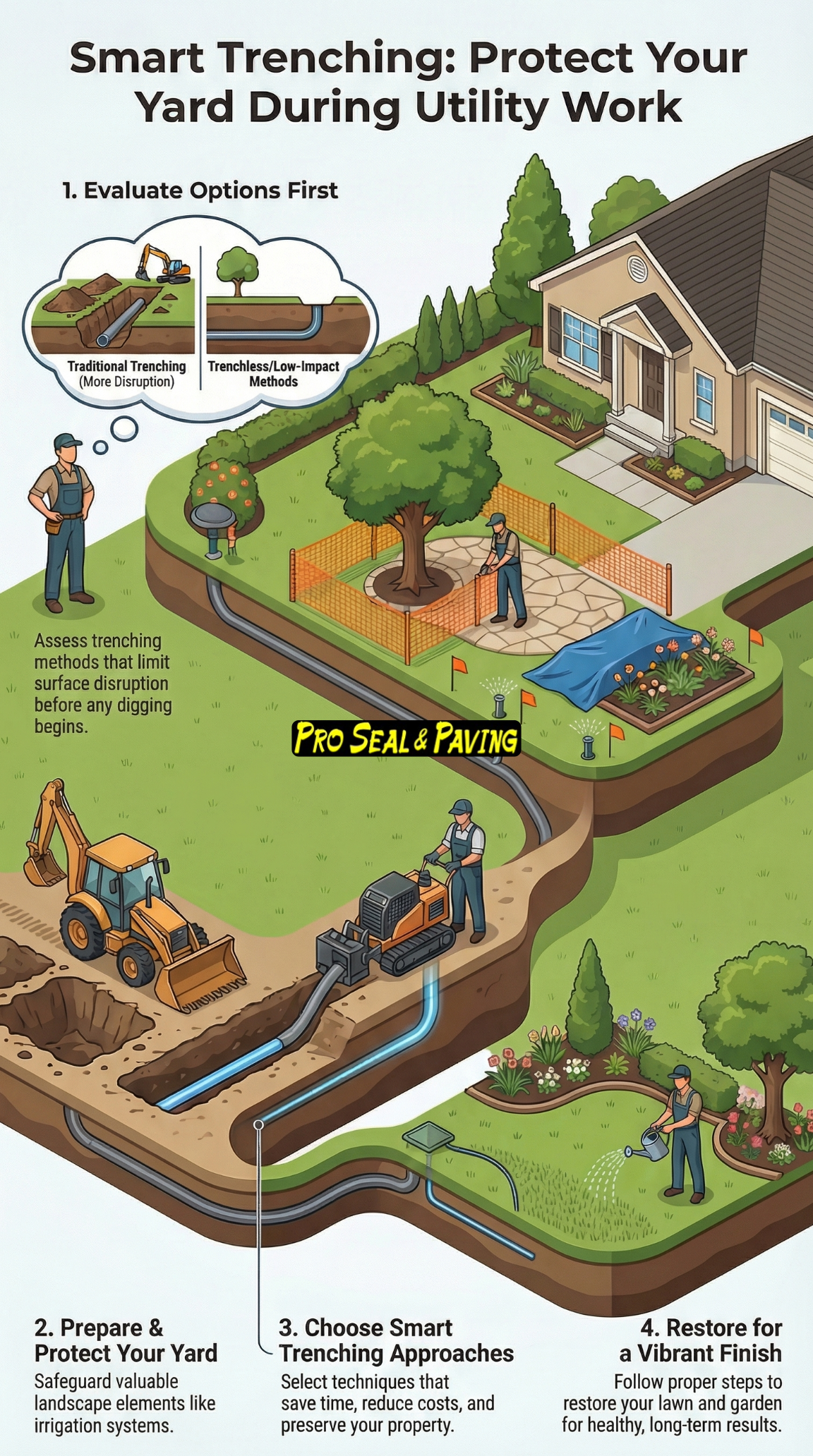
In Orleans County, sewer and water line work is not a one-size-fits-all scenario. Soil conditions, landscaping design, irrigation, existing plantings, yard topography, and even seasonal weather play a role in how trenching affects your property. Whether you’re dealing with an aging sewer line in your Albion yard, upgrading a water service pipe in Shelby, or installing new infrastructure on a rural parcel in Kendall, understanding how to reduce surface disturbance and preserve your outdoor living space is essential.
This guide walks homeowners through must-know practices for planning, executing, and restoring utility trenches while protecting lawns, gardens, and outdoor features across Orleans County, NY’s distinct towns and villages. You’ll learn how to:
- Evaluate trenching options that limit surface disruption
- Prepare your yard and protect landscape elements
- Choose trenching approaches that save time and money
- Restore your lawn and garden for a healthy, vibrant finish
By combining locally relevant insight with proven techniques used by utility professionals, you’ll be empowered to make informed decisions that safeguard your home’s infrastructure and preserve the full beauty of your property. Whether you’re just starting to plan or are already in the middle of a project, this guide gives you the knowledge you need to get the best possible outcome with the least landscape impact.
Chapter 1: Planning Sewer and Water Line Trenching in Orleans County Towns
Bottom Line Up Front: Thoughtful planning before any trenching begins in Albion, Barre, Carlton, Clarendon, Gaines, Kendall, Murray, Ridgeway, Shelby, and Yates results in less disruption and a more successful outcome for your sewer and water line work.
Successful utility trenching always starts long before the first shovel hits the ground. In Orleans County, where the landscape ranges from canal-side lots in Albion to rural parcels in Gaines and Ridgeway, understanding the unique terrain and existing infrastructure is critical.
Know Your Property and Yard Features. You should begin by walking your property and mapping key features you care about, such as established flower beds, vegetable gardens, irrigation lines, tree canopies, patios, ornamental rocks, and other landscape elements. Creating a physical or digital site map with these features marked helps you and your contractor choose a trench route that avoids the most sensitive spaces.
Call Before You Dig. In New York State, property owners must employ utility locating services before excavation to mark underground gas, water, electric, communications, and sewer lines. Calling such services well ahead of your project not only protects workers and utilities but also prevents unexpected damage that can destroy lawn and garden areas.
Discuss Soil and Drainage. Orleans County soils vary across towns, affecting trench stability and landscaping stress. Clay soils, common in some areas, retain water and compact easily, while sandy soils drain faster but shift more readily. Knowing soil type helps your contractor plan for proper trench depth, shoring, and restoration sequencing.
Select Low-Impact Project Timing. Whenever possible, schedule work during drier seasons and avoid extremely wet spring or fall conditions, which can amplify lawn damage and soil compaction. Winter work in Orleans County often leaves frozen ground exposed until spring, so balance seasonal conditions with restoration timing.
Planning isn’t just paperwork; it’s an investment in keeping your property intact, establishing clear goals with your contractor, and marking out landscape features before trenching can save you time, money, and yard distress.
Chapter 2: Trenching Techniques That Protect Lawns, Gardens, and Landscaping
Bottom Line Up Front: In towns like Medina, Holley, Lyndonville, and Kendall, employing modern and sensitive trenching techniques significantly reduces surface disruption to yards, gardens, and lawns.
Challenging soil conditions and utility depths are part of rural and suburban trenching, but smart technique choices can significantly limit surface impact. Two main trenching paths exist: traditional open-cut trenches and trenchless technology.
Traditional Open-Cut Work with Added Care. Open-cut trenches physically remove soil to expose pipes. When this method is necessary, protect the surface by:
- Cutting and Storing Sod and Topsoil Separately. Carefully remove turf in strips rather than random chunks, label it, and store it on boards to avoid contamination with subsoil. This preserves living grass for reinstallation.
- Using Protective Mats for Equipment. Heavy machinery will rut lawns. Protective mats distribute weight and prevent deep wheel tracks that kill grass roots.
Trenchless Techniques When Conditions Allow. Although soil type and pipe layout sometimes necessitate traditional digging, trenchless options like directional boring require only small “launch and receive” pits at either end of the line. This approach keeps most of the surface undisturbed and is often preferred in residential yards with mature landscaping.
In stretches where tree roots are a concern, air excavation tools gently remove soil with compressed air rather than cutting through roots, preserving tree health and limiting damage to surrounding plants.
Communication with your contractor during trenching also matters. Frequent walk-throughs to confirm boundaries and sensitive areas help the crew avoid unintentionally changing planned routes or damaging features.
Chapter 3: Post-Trenching Landscape Protection and Restoration
Bottom Line Up Front: In Barre, Clarendon, Ridgeway, Shelby, and Yates, careful restoration following trenching quickly and sustainably restores lawns and gardens.
Once the sewer or water line installation is complete, how you restore the yard determines how quickly your landscape returns to health.
Replace Topsoil and Sod Correctly. Topsoil should be the last layer added before sod and seed. If you saved turf strips, lay them back in proper sequence. Loose soil and poor layering trap water and create depressions that kill new grass. Compacting soil in thin layers prevents settling and low spots.
Irrigation and Watering Adjustments. If your lawn or garden has irrigation systems, test them after backfill. Broken or shifted irrigation lines are standard after trenching but are easy to fix before surfaces are replaced.
Amend Soils to Encourage Growth. Adding compost or fresh topsoil in trench areas helps grass and plant roots reestablish themselves more quickly. For newly seeded areas, protect them with straw or light mulch to retain moisture and minimize erosion until seedlings are sturdy.
Protect Trees and Shrubs. Large trees in Orleans County yards, especially in older neighborhoods like Albion and Holley, may have root systems disturbed by trenching. Mulching and deep watering encourage root recovery and reduce stress.
Chapter 4: Long-Term Yard Management and Utility Protection for Orleans County Homeowners
Bottom Line Up Front: Proper long-term yard care in Orleans County, NY, helps protect buried sewer and water lines and keeps your landscaping thriving.
Trenching might be done, but maintenance is ongoing. Monitor restored areas for settling or soggy spots that indicate poor drainage or soil compaction. Add topsoil and reseed as needed to maintain smooth, even turf.
In the years ahead, plant trees and shrubs with root systems that do not interfere with buried utilities. Avoid planting aggressive trees like maples or willows directly above lines; instead, choose shallow-rooted species or plant farther away from utility lines.
Record where sewer and water lines run on your property. This documentation simplifies future projects, prevents accidental digs through utility lines, and informs landscapers where not to plant large, invasive root systems.
Closing Summary
From Albion to Yates and everywhere in between in Orleans County, NY, thoughtful planning and execution make all the difference when you’re dealing with sewer line or main water line trenching on rural and suburban properties. By choosing the proper trenching method, coordinating utility marking, and protecting your lawns, gardens, and landscaping throughout the process, you keep your outdoor spaces looking great long after the work is done. Whether you’re preparing for a new installation, repairing aging pipes, or replacing infrastructure, minimizing surface disturbance starts with careful preparation and ends with smart restoration and long-term yard care.
Every step of the process benefits from clear communication with contractors, local utility coordination, and an understanding of your soil, landscape features, and existing plantings. Planning and choosing techniques that preserve topsoil and turf not only protect your property’s beauty but also save time and expense on restoration later. Best practices in utility trenching broadly focus on reducing damage to surface features while ensuring the job is done safely and effectively.
Above all, remember that your property’s health is a long-term commitment. What you do during and after trenching influences drainage, soil stability, plant health, and overall curb appeal. With the right approach, your yard in Medina, Holley, Clarendon, Shelby, Kendall, or Murray can recover quickly, stay strong through seasonal changes, and remain a beautiful part of your home.
Getting help from professionals who understand local conditions and best practices can make the process smoother and less stressful.
If you are planning sewer line or main water line work on your property in Albion, Medina, Holley, Lyndonville, Kendall, Shelby, Gaines, or anywhere in Orleans County, NY, do not leave the condition of your lawn and landscaping to chance.
The right trenching approach starts with the proper conversation.
Before digging begins, speak with a local excavation or utility contractor who understands Orleans County soil conditions, rural properties, and landscaping preservation techniques. Schedule a walk-through of your yard, identify sensitive areas like gardens, trees, and irrigation systems, and confirm trenching and restoration plans upfront.
Protect your investment, your curb appeal, and your peace of mind. Plan smarter, trench carefully, and restore properly so your yard looks intentional, not torn up.
Start the conversation today and make sure your sewer or water line project is done right the first time.

Owner of PRO SEAL & PAVING
17+ years experienc